On 7 October 2026, I found myself travelling to Dartford, a town I had not visited for almost fifty years. I never imagined that I would return to meet a group of Nigerian actors preparing to perform a reimagining of Shakespeare’s Romeo and Juliet. The last time I was there was in July 1978, when I completed my teacher training at Dartford College of Education, having spent four formative years there from 1974 to 1978.
The journey brought back memories. In the 1970s, travelling from Southampton to Dartford meant taking a train to Waterloo, then another slow, dark and grimy train through southeast London. Dartford was a predominantly white, working-class town. My first teaching practice was in an all-white school. The college was several miles from the town centre, and the world I inhabited then seemed very far removed from the one I was about to encounter.
This time, I travelled on Thameslink, a sleek modern train that seemed to glide effortlessly into a transformed station. It was already dark when I arrived, and I saw little of the town I remembered. But the people around me immediately caught my attention. Young and middle-aged Africans, men and women making their way through the station and surrounding streets. I had returned to a place I once knew so well, yet the community I encountered was very different from the one I remembered.
I was looking for Papa’s Grill, a Nigerian restaurant just a few minutes’ walk from the station. When I finally found it and stepped inside, I could have been in Ikeja, Lagos. Contemporary interiors, Nigerian music, a lively atmosphere and the familiar warmth of a community gathering. I felt as though I had travelled not simply across London, but across continents.
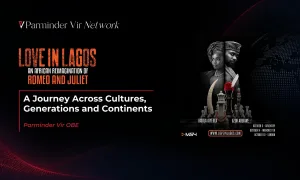
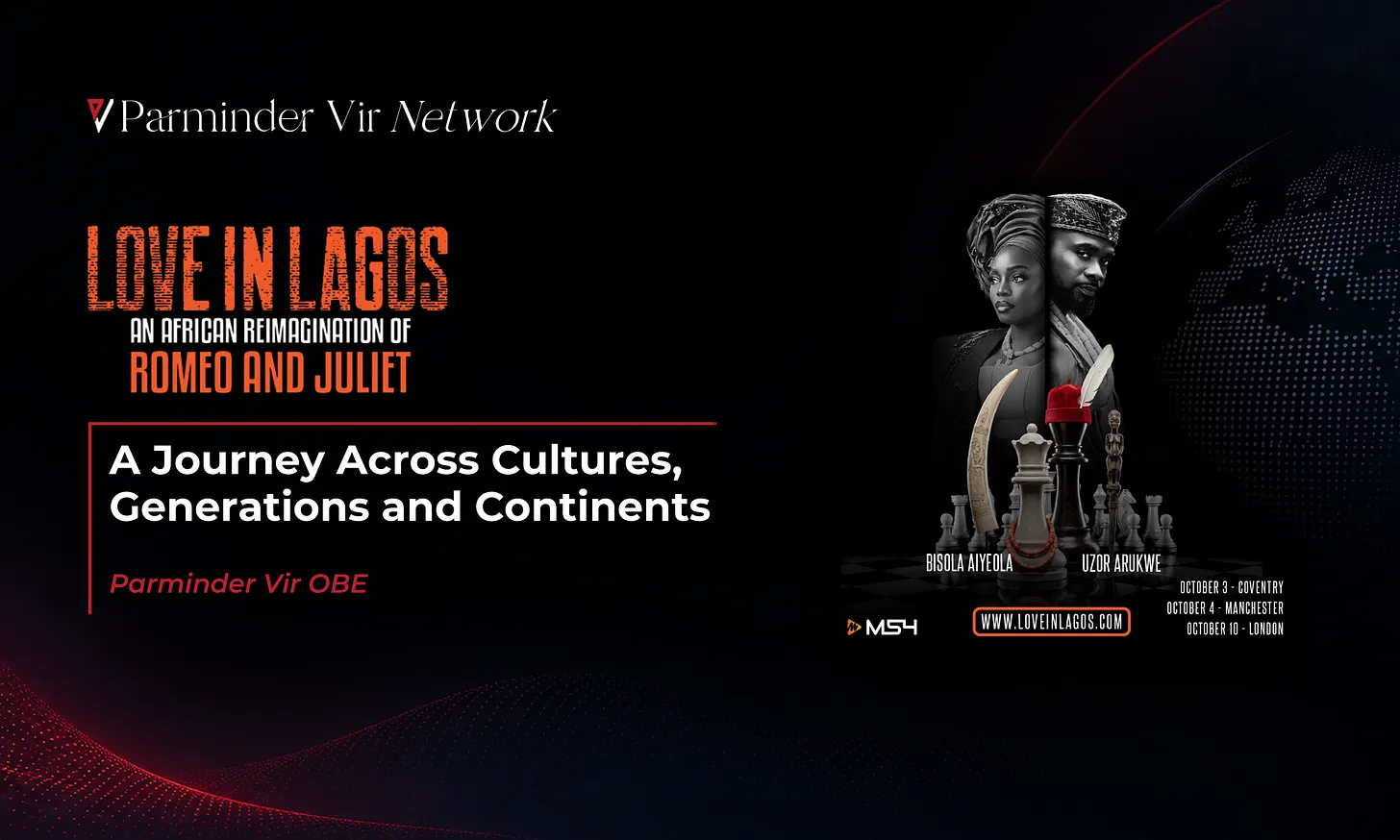
I had come to meet Kola Lamikanra, founder of M54 Studios, and the cast and director of his latest production, Love in Lagos.
A New Generation of African Storytellers
I had first met Kola in May 2026 at the Afribond Forum, where Ope Simpson, Partner at Terra Trust Capital, introduced us. Kola spoke with infectious enthusiasm about his ambition to bring African stories to audiences through live theatre. He had recently produced No Wahala Therapy, which had attracted an enthusiastic audience, and was already planning his next production.
His idea was deceptively simple: take one of the world’s most familiar love stories, Shakespeare’s Romeo and Juliet, relocate it to Lagos, bring together a cast of recognisable Nollywood actors, and tour the production to British cities with substantial Nigerian and African diaspora communities.
Even before seeing his work, I thought he was onto something.
Kola seemed to understand something fundamental about the relationship between popular culture and audiences. He was not waiting for established theatre institutions to invite him in. He was finding his audiences and taking the work directly to them.
By early October this year, Love in Lagos had opened in Coventry and travelled to Manchester. Both performances had drawn enthusiastic audiences. The London performances were scheduled for 10 October.
Around the table at Papa’s Grill were actors whose faces were familiar to millions of Nollywood viewers. Uzor Arukwe, playing Romeo, and Bisola Aiyeola, playing Juliet, spoke about the excitement and challenges of performing on stage. Both told us this was their first experience of live theatre. They were joined by Oluwaseyi Classic, a young British Nigerian entertainer making his own transition to the stage.
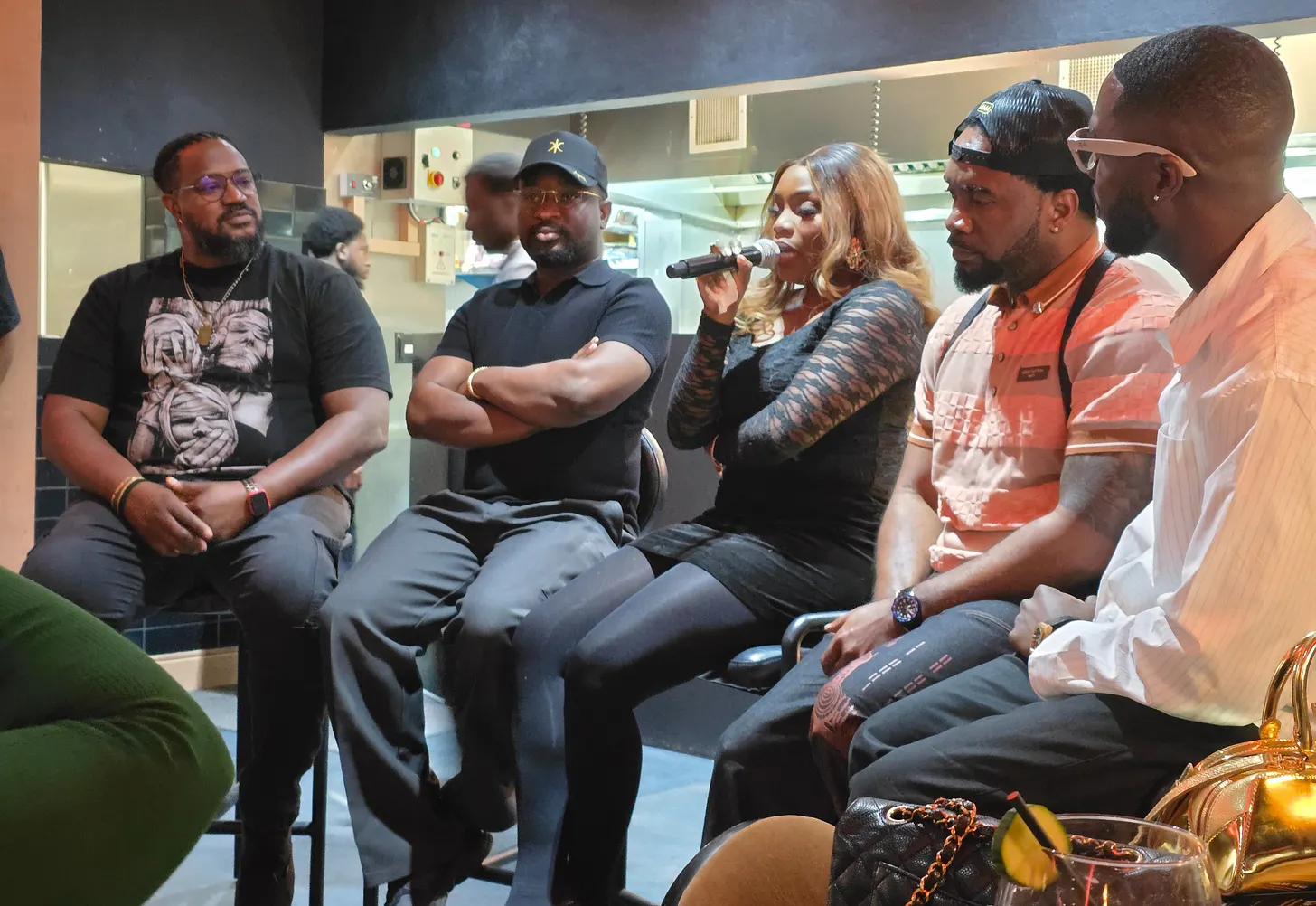
Later, the director, Mofe Duncan, joined us, along with Kola, the Producer. What struck me was the energy around the table. These were accomplished screen performers embracing the unpredictability of theatre, where there are no second takes, no editing and no opportunity to correct a mistake once the curtain rises.
The conversation moved easily between storytelling, identity, migration and the relationship between Nigeria and its diaspora.
At one point, I was invited to reflect on the parallels between Romeo and Juliet and Indian storytelling. I spoke about Laila Majnu and Heer Ranjha, our own tragic love stories, familiar across generations and languages. The conversation immediately turned to Bollywood. One participant recalled growing up watching Indian films, even sneaking away from school to see classics like Sholay and Pakeezah.
I smiled. During my years travelling around Nigeria, I had often been greeted by young people who recognised my Indian heritage and spontaneously began singing Hindi film songs. Here we were, in a Nigerian restaurant in Dartford, discussing Shakespeare, Bollywood and Nollywood, three storytelling traditions connected by the universal themes of love, family, conflict and belonging. Culture travels in ways that institutions and governments can rarely anticipate.
The Histories We Inherit, and Those We Forget
Listening to Kola talk about his ambitions, I found myself transported back to another period of my life.
In the 1980s, working at the Greater London Council, I was part of a movement to open Britain’s cultural institutions to Black artists and communities who had long been excluded from mainstream programming. We worked with theatres, concert halls, galleries and arts organisations to create opportunities for Black British, African, Caribbean and Asian artists to present their work to wider audiences.
I remembered the battles over access to venues, the arguments about who constituted an audience, and the persistent assumption that Black cultural work belonged on the margins rather than at the centre of British cultural life.
Four decades later, here was Kola encountering some of the same barriers. He told us how difficult it had been to secure established theatre venues for his productions. Rather than abandon the idea, he looked elsewhere, finding large multipurpose spaces he could adapt for live performance.
There was something both inspiring and troubling about this. Inspiring because Kola was demonstrating the resourcefulness and determination that have always characterised independent cultural entrepreneurs. Troubling because it raised questions about how much had really changed in the relationship between Britain’s established cultural institutions and its diverse communities.
I wondered how much Kola and his generation knew about the Black theatre movements of the 1970s and 1980s, the artists and organisations that had challenged those barriers, and the infrastructure that had been built, often against considerable resistance. Each generation brings its own imagination to the challenges it inherits. But the histories of those who challenged exclusion, created opportunities and built lasting cultural institutions deserve to be remembered, not simply for their own sake, but because they offer lessons for those building the future.
Kola’s approach also represented something different. He was not primarily seeking public subsidy or institutional recognition. He was building a commercial proposition around a clearly identifiable audience, combining popular stories, recognisable performers and the extraordinary reach of Nigerian culture.
My generation of Black artists and cultural activists had also created independent organisations, built audiences and challenged established institutions. But the world in which Kola was operating had changed. The growth of African diaspora communities, the global influence of Nollywood and Nigerian music, and the ability to connect directly with audiences were opening up new possibilities for cultural entrepreneurship.
I found myself reflecting on what Kola’s generation might learn from the experiences and achievements of those who came before, and what my generation might learn from the new possibilities they are creating through their imagination, confidence and entrepreneurial spirit.
Returning to Woolwich
Three days later, on Saturday 10 October, I made another journey into South East London, this time to Woolwich, to see Love in Lagos.
Woolwich was another place I remembered from my student days. In 1975, Dartford College of Education began discussions about merging with Thames Polytechnic, a much more radical institution based in Woolwich. I recalled travelling there for meetings, encountering a different political and educational environment from the relatively conservative world of my teacher training college.
Nearly fifty years later, I was returning to Woolwich for an entirely different reason. It was evening, and although I recognised fragments of the place I remembered, I had little opportunity to explore how it had changed. Much of what I was learning about the transformation of South East London came instead through conversations with Kola and Ope, and through the communities and cultural spaces I was encountering. From them, I learned more about the Nigerian professionals who had settled in South East London and Kent since the 2000s. Many worked in healthcare, technology, engineering and financial services. They had been drawn by more affordable family housing, good schools, and the opportunity to build family lives while maintaining their careers in London.
As families established themselves, communities grew. Restaurants, churches, businesses and social networks followed. Some families like Kola and Ope’s were now moving further into Kent, seeking larger homes and more space for extended families. I recognised this pattern. Migration is never simply about people moving from one country to another. It is also about the gradual creation of new places, new institutions and new forms of belonging.
My destination was Gateway House, a building I recognised almost immediately as a former Odeon cinema. Its distinctive architecture brought back memories of the cinemas of my youth. The building had been acquired by New Wine Church and transformed into a place of worship, broadcasting and community gathering, while retaining elements of its original Art Deco character.
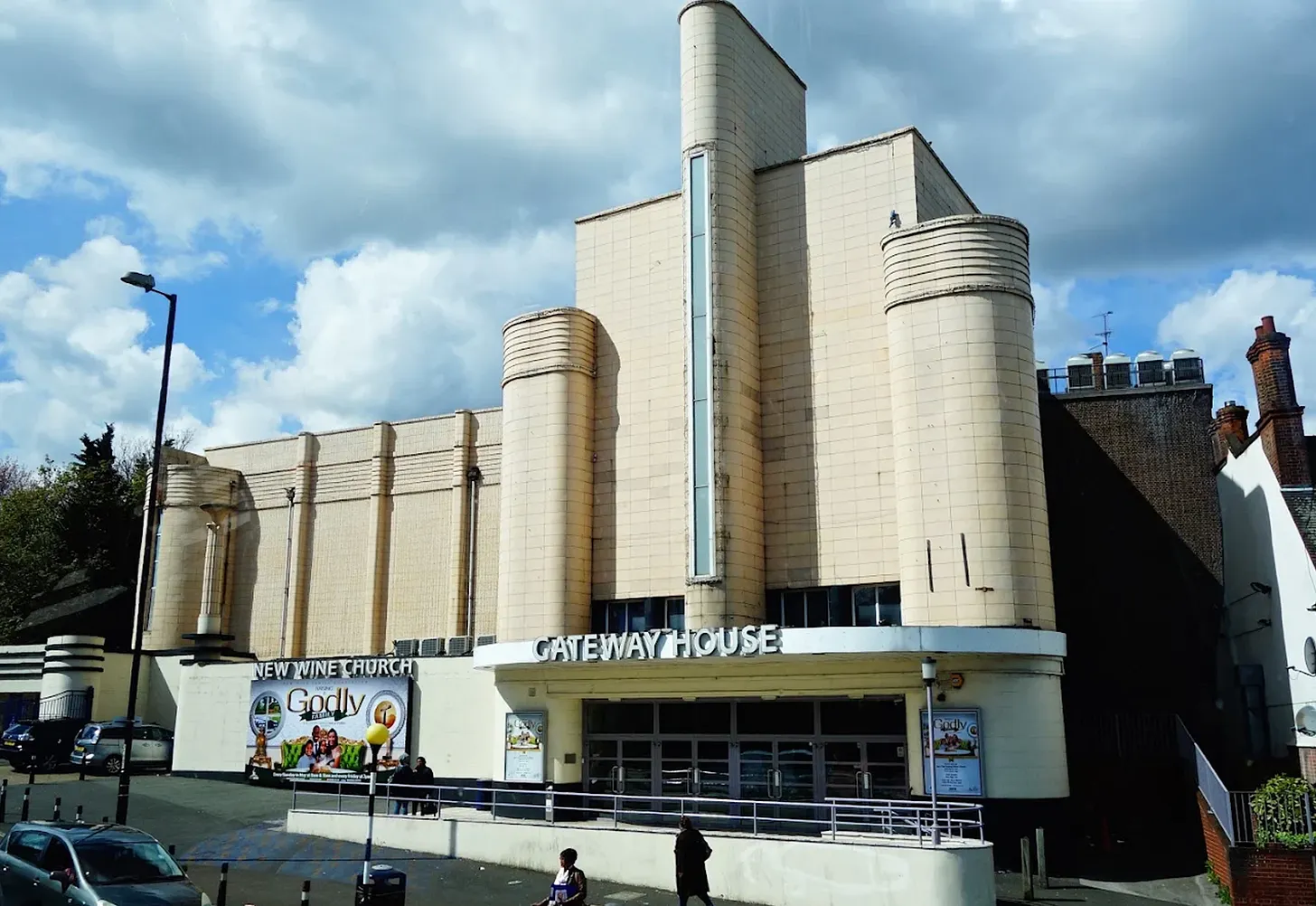
Here was another transformation. A building once devoted to cinema had become a church and community centre, and on this particular Saturday evening it was hosting a Nigerian theatrical production. I was fascinated by the layers of history contained within this one building.
When The Audience Becomes The Chorus
Nothing quite prepared me for the experience of Love in Lagos. I have seen many productions of Romeo and Juliet, including performances by the Royal Shakespeare Company and adaptations for film and other cultural settings, including India. But this was unlike any I had experienced.
Set in Lagos at the moment of Nigerian independence in 1960, the story brings together two rival families, the Yoruba Adeyemis and the Igbo Okonkwos, whose political and social ambitions collide when their children fall in love.
The adaptation draws on Nigeria’s complex history, the relationships between its communities, and the tensions between belonging, power and identity. Having spent years working in Nigeria, I recognised some of the deeper resonances beneath the comedy and spectacle.
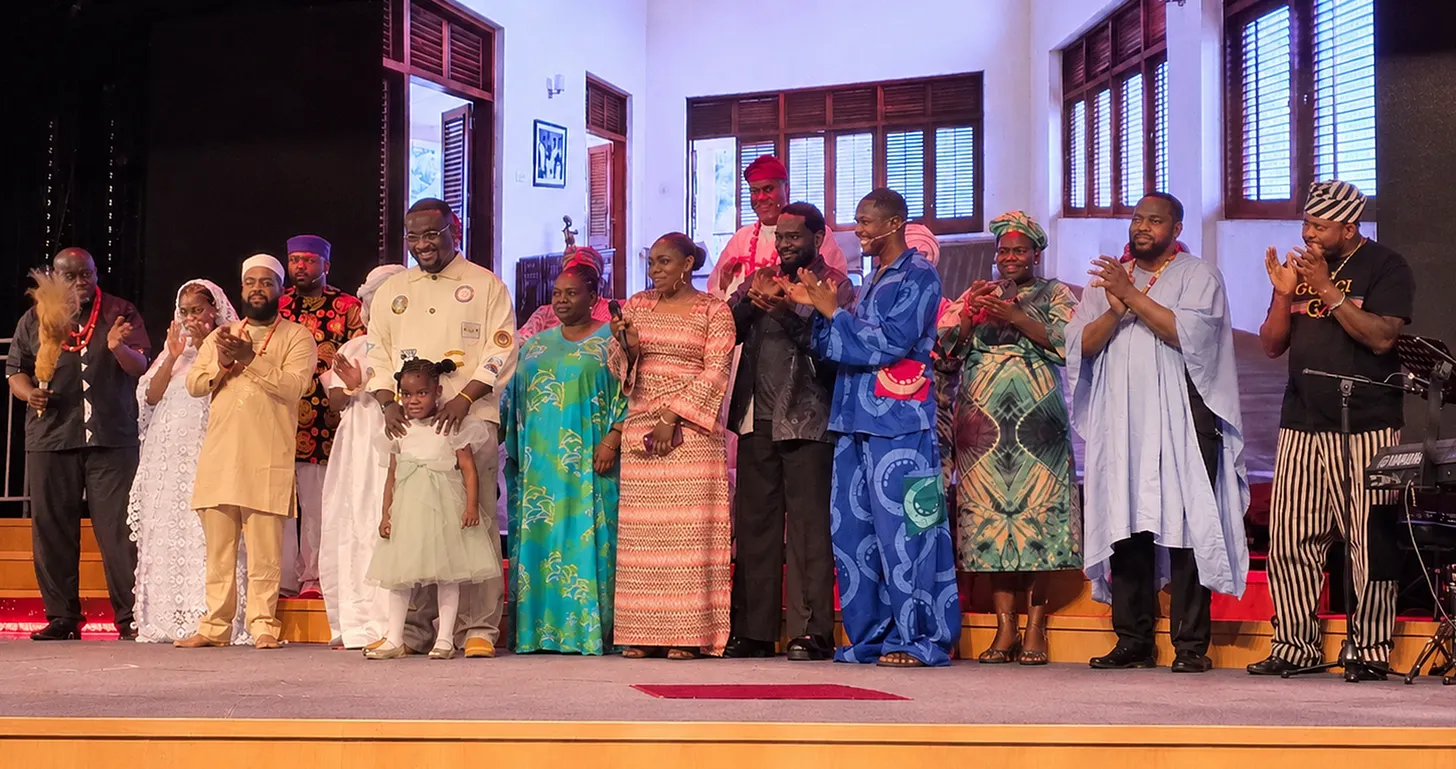
Yet what I remember most vividly is not the political setting or even the familiar tragedy of the lovers. It is the audience. That evening, 1,179 people had gathered, filling the venue to 101% of its stated capacity. The audience was overwhelmingly Nigerian, and from the moment the performance began, they became part of the spectacle. They laughed, shouted, sang, responded to the actors and occasionally drowned them out. The performers moved between English, Yoruba and Igbo, and the audience followed every shift in language, every cultural reference, every joke.
The live band was as much a participant as the actors, responding to the action on stage and drawing the audience further into the performance. At one point, a saxophonist began playing My Heart Will Go On. The audience joined in, hundreds of voices rising together. To my surprise, I found myself singing too.
It was magical.
In conventional English theatre, audiences are generally expected to remain silent, to observe and respond at designated moments. Here, the boundary between performer and spectator seemed to disappear. We had become the chorus.
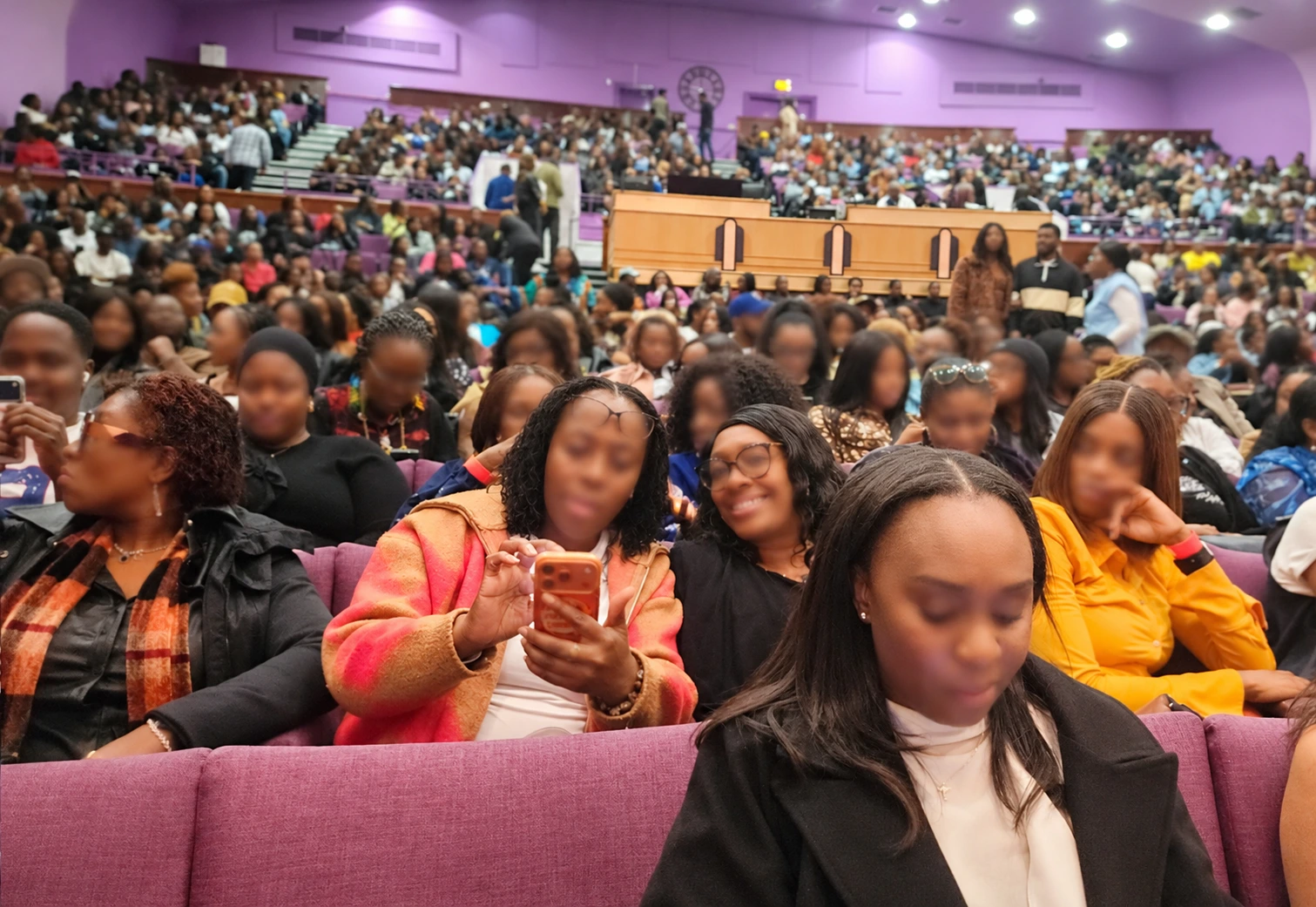
The production was exuberant, closer at times to pantomime than to the Shakespearean tragedy I had known. There was music, dancing, comedy, spectacle and an extraordinary sense of collective enjoyment.
Each entrance was greeted with an outpouring of love and affection. Uzor Arukwe (Romeo), Bisola Aiyeola (Juliet), Owobo Ogunde (Chief Adeyemi), a celebrated actor from the legendary family that pioneered Nigerian theatre, and Ruke Amata (Chief Okonkwo), a seasoned actor and filmmaker, were welcomed with thunderous cheers and applause. The action seemed to pause each time a familiar face appeared, as the audience erupted with excitement at seeing their beloved Nollywood stars in the flesh. For those few moments, the story on stage gave way to a celebration of the performers themselves.
And then there was Oluwaseyi Classic, playing Kayode, who was an absolute revelation. A young British Nigerian entertainer making his stage debut, he brought an infectious energy and humour that had the audience roaring with laughter. Every time he appeared, he commanded the stage with remarkable confidence, comic timing and an instinctive connection with the audience. He didn’t need the recognition of an established Nollywood star to win their affection. He won them over through the sheer force of his talent. I found myself thinking that if I were still commissioning television programmes, I would book him immediately.
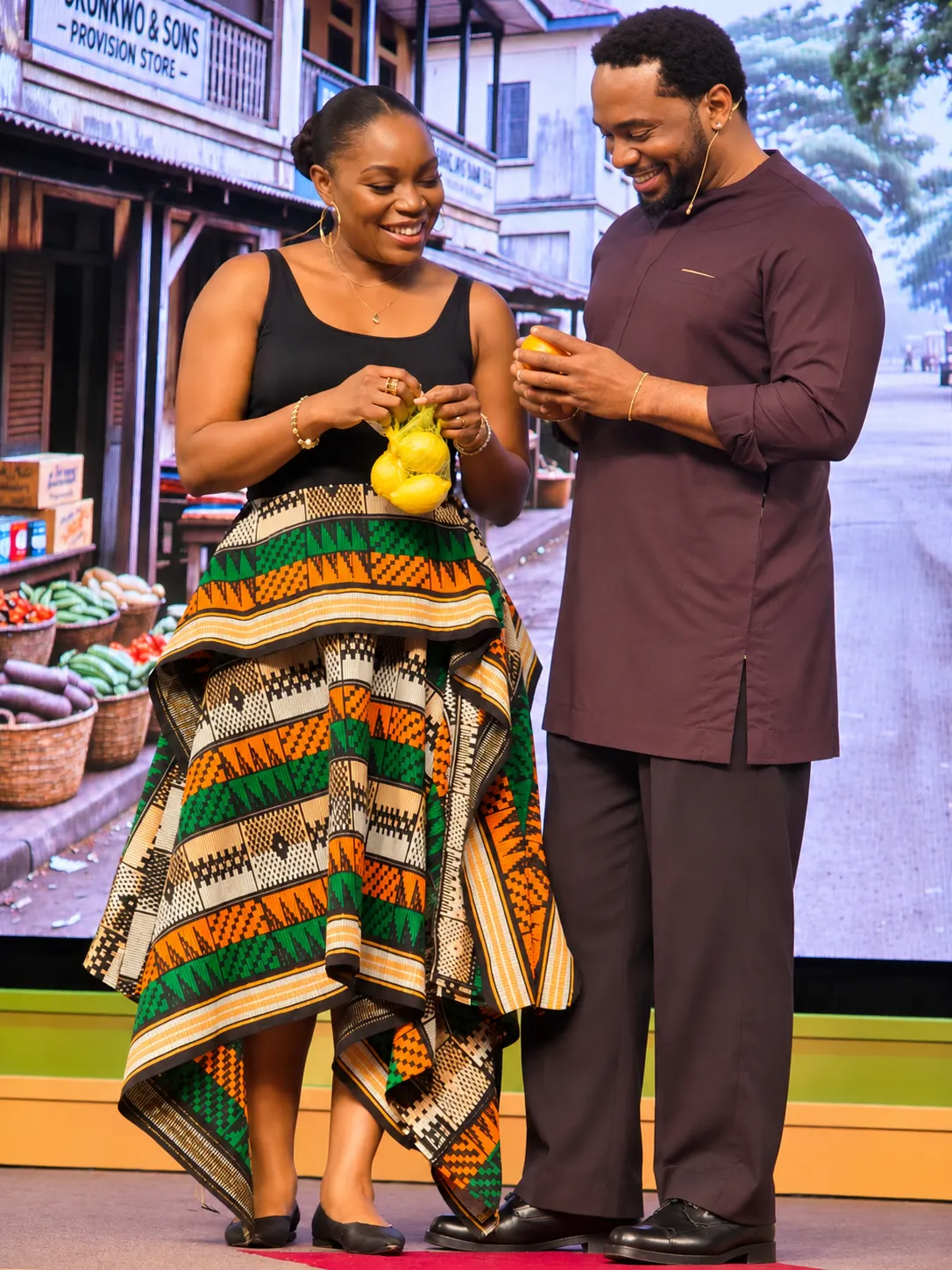
The production was not without its challenges. The performance began more than an hour late, and the scale of the undertaking was clearly demanding. But none of this seemed to diminish the audience’s enthusiasm. There were standing ovations, laughter and moments of genuine emotional connection. I cannot remember the last time I laughed so much in a theatre. By the end of the evening, I was utterly exhausted and exhilarated.
Surrounded by Nigerians, listening to the music, laughter and languages of Lagos, I felt as though I had returned to a city that had been such an important part of my life. The next morning, I left for BIGTECH Africa 2026 in Tunisia. But the experience stayed with me.
The Power Of A Diaspora Audience
What I witnessed that evening raised questions extending well beyond one theatrical production. For decades, Indian cinema, music and popular entertainment have travelled with the Indian diaspora, creating audiences and commercial opportunities across Britain, North America, the Middle East and beyond. Bollywood stars, musicians and major entertainment events have filled large venues, drawing on the cultural connections that migrants maintain with their countries of origin.
I had watched a similar cultural phenomenon unfold across Africa through the extraordinary reach of Nollywood and Nigerian music. Afrobeats artists such as Wizkid, Burna Boy and P-Square have demonstrated the international appetite for Nigerian popular culture. Nollywood has created its own vast audiences across Africa and the diaspora. Now I saw another possibility emerge: live theatre as a way to bring diaspora communities together, connect audiences with performers they already loved, and create new markets for African storytelling.
What struck me was that these audiences were not just preserving cultural connections with their countries of origin. Through their enthusiasm, purchasing power and willingness to support productions like Love in Lagos, they were helping create the conditions for new creative enterprises to flourish. The performance was more than an evening’s entertainment. It was a shared cultural occasion, a celebration of identity and belonging, and a glimpse of the commercial possibilities emerging from the African diaspora itself.
I began to see how Kola’s ambitions extended beyond individual productions. He was imagining a touring enterprise capable of reaching audiences across Britain, Europe and North America. I could picture productions combining Nollywood performers with Nigerian musicians, new stories alongside adaptations of familiar classics, and audiences gathering in cities where African communities had established themselves.
Yet building a sustainable creative enterprise requires more than enthusiasm and a successful production. Touring theatre is expensive and logistically demanding. Venues, rehearsals, technical production, travel, accommodation, marketing and the availability of performers all require careful planning and substantial resources. These are questions Kola will need to address as he develops his ambitions for M54 Studios.
But I recognise something in his approach that I have encountered repeatedly among entrepreneurs across Africa: the ability to spot an opportunity where others see an obstacle, mobilise relationships and resources, and act before every element of the plan is perfectly in place. He has a vision, an instinct for his audience and the determination to make things happen. Those qualities matter.
The Connections That Endure
As I reflected on those two October evenings, I realised that what had begun as an invitation to meet a group of actors and attend a theatrical performance had become something much more personal.
The journeys had connected different periods of my life: the young woman training to become a teacher in Dartford in the 1970s, my work opening cultural institutions to Black artists during the GLC years, my career in film and television, and the extraordinary creativity and entrepreneurial energy I had encountered during my years in Africa.
They had also reminded me how cultural histories travel and intersect. Shakespeare travels to Lagos. Nollywood actors step onto British stages. Nigerian audiences sing a song from a Hollywood film. Indian love stories enter a conversation in a Dartford restaurant. A former cinema becomes a church and, for one evening, a theatre.
I had returned to Dartford and Woolwich after almost fifty years, but both visits had taken place in the evening. I had seen little of the towns themselves. Instead, I had encountered the people, stories and cultural spaces that were giving them new meaning. I want to return, this time in daylight, to walk through the streets I once knew and discover more about the Nigerian and West African communities that now call these places home.
And somewhere within this continuing story is Kola Lamikanra, building his own future through the power of African storytelling.
But I left Woolwich with a powerful sense of possibility.
I want to see him succeed.
Not simply because he has created an entertaining production, but because I recognise in his determination something that has sustained my own journey: the belief that our stories deserve to be told, and that we have the power to create the spaces in which they can flourish.
Parminder Vir OBE
Storyteller | Writer | Entrepreneurship & Ecosystem Builder
Entrepreneurship Expert, Oxford Saïd Entrepreneurship Centre
Ambassador, India–Africa Tech & Startup Bridge, BIGTECH Africa 2026
Former CEO, Tony Elumelu Foundation