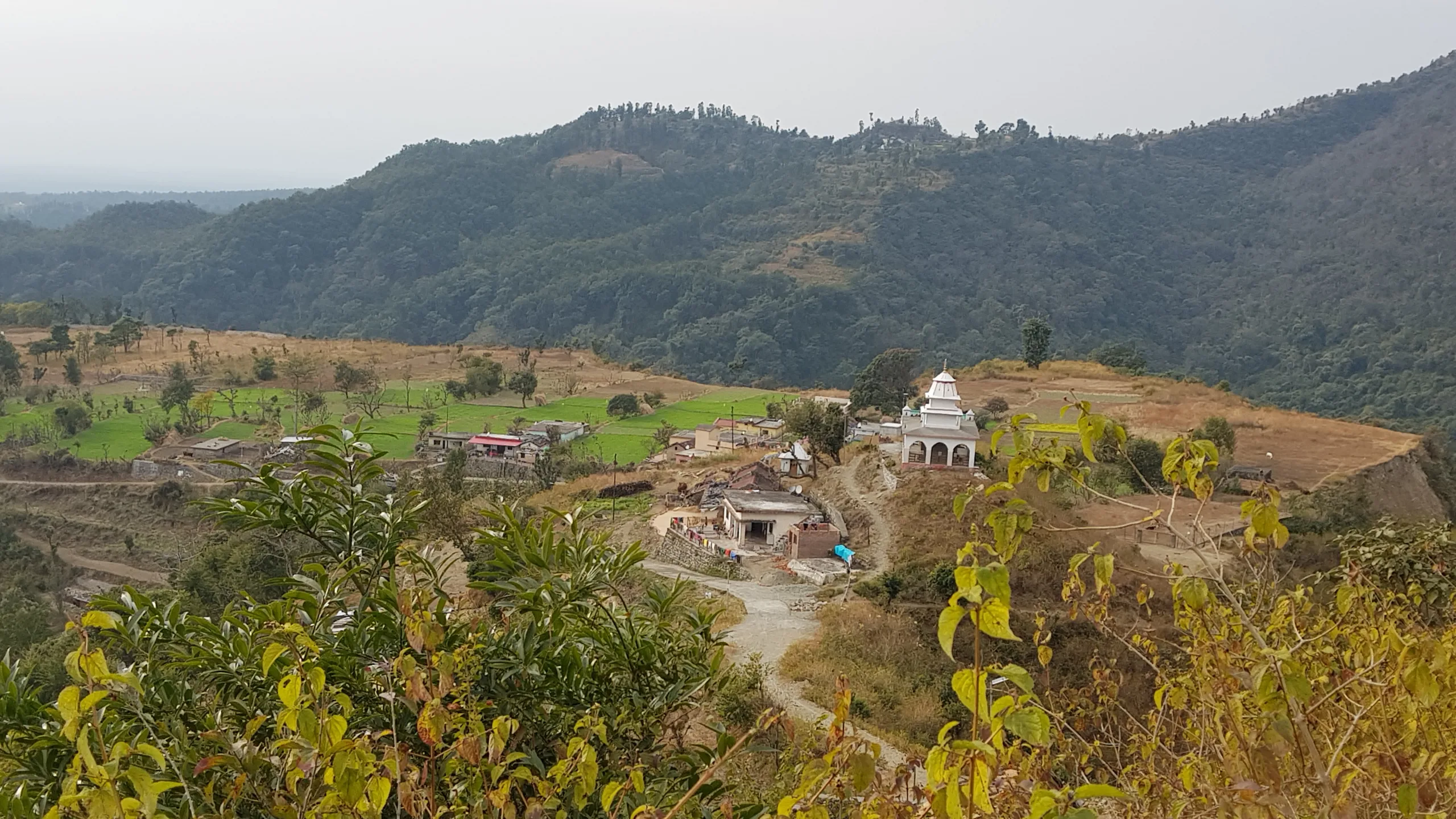
Over the past decade, I have spent increasing amounts of time in northern India, in a small village in the foothills of the Himalayas near Dehradun in Uttarakhand. I was born in a village in Punjab before migrating to England in 1965. In my mid-fifties, I found myself returning to village life once again.
The daily treks through forests and mountain paths, along rivers and valleys, sharpened my sense of stillness and observation. But it was the conversations in the village that changed how I began to think about India itself: conversations with shopkeepers, taxi drivers, students, labourers, and farmers. Away from conference halls and five-star hotels, I encountered a different perspective on the country’s transformation.
There is something grounding about observing a country from the edges rather than its centres.
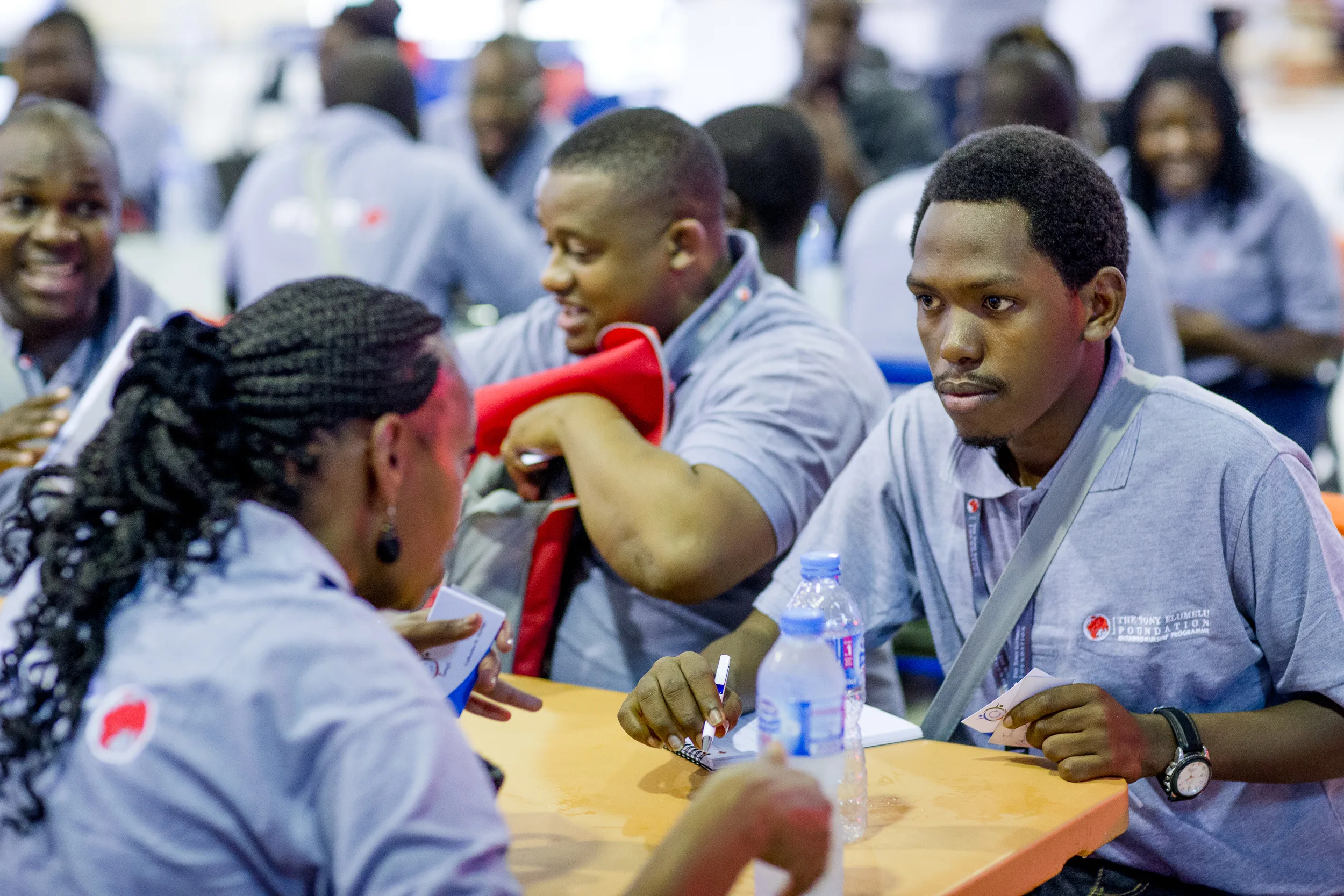
During the years (2014-2019) I lived in Lagos and travelled extensively across Africa as CEO of the Tony Elumelu Foundation, supporting entrepreneurs in all 54 African countries. I saw firsthand the ingenuity, resilience, and ambition shaping a new generation of African founders. During this same period, India itself was also undergoing profound change. From afar, I watched it emerge as one of the world’s most dynamic technology and startup ecosystems, combining engineering talent, digital public systems, entrepreneurial ambition, and reach in ways that have reshaped its economy.
But it was only through spending long periods in the village that I began to understand how deeply that transformation was reshaping everyday life.
I heard stories about roads reaching remote regions, more reliable electricity, mobile internet, indoor toilets, digital payments, and changing aspirations among young people. I also heard anxieties about jobs, inequality, migration, and the pressures of rapid change.
India’s transformation remains uneven and contested, as all large transformations are. Progress and inequality often coexist. Ambition and anxiety move together.
Living in Lagos changed how I saw India. Returning to India changed how I saw Africa.
Seen from a distance, both regions are often discussed through simplistic narratives: growth markets, demographic opportunity, emerging economies. But on the ground, the realities are far more complex, dynamic, and interconnected.
Yet I found myself thinking not only about India but also about the relationship between India and Africa.
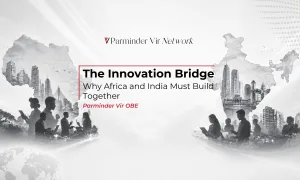
After decades of working across entrepreneurship, storytelling, media, investment, and institutional systems, I have come to believe that one of the most important strategic relationships of the next decade may emerge not between the traditional centres of power, but between India and Africa.
Not simply through trade.
Not through aid.
And not through the replication of Silicon Valley models.
But through a new form of Global South collaboration grounded in entrepreneurship, digital systems, talent, and co-created innovation.
The Emergence of a New Global South
The global economy is reorganising itself.
Artificial intelligence is reshaping industries. Supply chains are diversifying. Nations are rethinking technological sovereignty, industrial policy, and digital architecture. At the same time, demographic and economic power is steadily shifting toward emerging markets.
For decades, the dominant flows of capital, technology, and influence moved primarily between North America, Europe, and parts of East Asia. That geography is changing.
The next phase of growth may emerge from countries and regions that have learned how to build under conditions of pressure, scarcity, fragmentation, and rapid change.
This shift is already visible.
Over the past decade, India has steadily expanded its engagement across Africa through trade, digital systems partnerships, education exchanges, healthcare, technology cooperation, and diplomatic outreach. India positions Africa as central to its broader Global South strategy, while African countries are looking eastward for new models of technology, entrepreneurship, and economic partnership.
Prime Minister Narendra Modi has made Africa a significant pillar of India’s foreign policy engagement, and India has expanded its diplomatic missions, trade relations, development partnerships, and institutional cooperation across the continent. India has also positioned itself as a leading voice of the Global South, particularly around questions of technology, development, public digital systems, and multipolarity.
At the same time, African countries are deepening relationships with India across:
- trade,
- education,
- digital systems
- healthcare,
- startup ecosystems
- and skills development.
Yet despite these developments, the deeper significance of the India-Africa relationship remains underexplored — particularly in the context of innovation, public digital infrastructure, entrepreneurship, and future geography of global power.
That is one reason the India-Africa relationship matters.
India and Africa face many of the same structural challenges:
- youth employment,
- financial inclusion,
- urbanisation,
- climate vulnerability,
- infrastructure deficits,
- and unequal access to opportunity.
Yet both are also becoming laboratories for innovation adapted to the realities of emerging economies.
Technology, in this context, is no longer simply a sector of the economy. It now functions as a foundational system shaping finance, healthcare, education, agriculture, logistics, governance, and commerce itself.
The countries that learn to build interoperable digital systems for large and diverse populations will help shape the future global economy.
India’s Digital Transformation
India’s transformation over the past decade has been remarkable.
What interests me most is not the familiar narrative of unicorns or valuation growth, but the deeper architecture that enabled expansion.
India built population-scale digital public systems through Aadhaar, UPI, and India Stack. These interoperable systems lowered transaction costs, expanded financial inclusion, accelerated digital participation, and created platforms upon which private innovation could flourish.
India is also sharing aspects of this model internationally, including with African countries exploring digital identity systems, payment platforms, and e-governance frameworks.
Even in the village, I began to see how profoundly these digital systems were altering daily life. Small shopkeepers now routinely accept digital payments. Young people move seamlessly between local realities and global digital culture through smartphones. Information, services, entertainment, commerce, and aspiration increasingly flow through digital networks.
Importantly, this transformation did not emerge solely through private enterprise. It evolved through the interaction of:
- state-enabled infrastructure,
- entrepreneurial energy,
- policy coordination,
- engineering talent,
- and mass digital adoption.
India did not become Silicon Valley.
It built something different.
It developed models adapted to its own scale, complexity, and developmental realities.
Today, India is one of the world’s leading startup ecosystems, with major activity across fintech, SaaS, AI, healthtech, agritech, climate tech, and advanced manufacturing. Indian startups have shown a particular ability to build low-cost, mobile-first platforms capable of serving enormous populations.
India has also invested heavily in engineering education, technical training, digital skills development, and entrepreneurial capacity-building — areas that will become critical for African economies seeking to scale innovation ecosystems over the coming decades.
There are important lessons here for emerging economies globally.
Africa’s Entrepreneurial Frontier
Africa is also entering a significant new phase of technological and entrepreneurial growth.
The continent has the world’s youngest population. Mobile adoption continues to expand rapidly. Digital payments, fintech, logistics platforms, climate innovation, and AI-driven services are growing across multiple markets.
But Africa’s importance cannot be reduced to demographics alone.
Some of the most interesting innovations happening across the continent are emerging precisely because entrepreneurs are building under conditions of constraint.
Limited infrastructure often forces unusually high levels of creativity, adaptability, and problem-solving. African founders are frequently designing businesses for fragmented markets, informal economies, uneven connectivity, and low-cost mobile access from the outset.
In several areas, African entrepreneurs have become leaders in leapfrog innovation:
- mobile money,
- digital finance,
- informal commerce platforms,
- off-grid energy,
- and mobile-first services.
What I witnessed repeatedly during my years at the Tony Elumelu Foundation was not a shortage of entrepreneurial talent, but a shortage of systems capable of supporting long-term growth:
- capital,
- connectivity,
- networks,
- policy continuity,
- and institutional coordination.
Africa’s next challenge is not simply startup creation.
It is ecosystem maturation.
Why India and Africa Need Each Other
This is where the strategic opportunity becomes interesting.
India and Africa are not mirror images of one another. Their histories, political systems, and economic structures are very different. But they are complementary in powerful ways.
India brings:
- experience building public digital systems,
- engineering depth,
- manufacturing capability,
- startup ecosystem maturity,
- and more sophisticated venture capital networks.
Africa brings:
- rapidly expanding markets,
- demographic growth,
- entrepreneurial dynamism,
- mobile-first innovation,
- and one of the world’s most important long-term growth frontiers.
Both regions understand what it means to build under pressure rather than in abundance.
That matters.
The opportunity is not for India to “export” innovation into Africa. Nor is it for Africa to mechanically replicate India’s path.
The real opportunity lies in co-building:
- digital public systems,
- AI models,
- climate technologies,
- manufacturing partnerships,
- startup ecosystems,
- investment platforms,
- and new forms of entrepreneurial collaboration adapted to emerging market realities.
This is particularly important in the age of artificial intelligence.
Much of today’s AI architecture is being designed around Western datasets, languages, assumptions, and commercial priorities. Yet the next billion digital users will largely come from Africa and South Asia.
The future of AI cannot be built only around English-speaking Western markets.
India and Africa together have an opportunity to shape more inclusive digital futures grounded in linguistic diversity, affordability, accessibility, and local realities.
The Missing Layer: Institutions
Yet ambition alone is not enough.
One lesson I have learned repeatedly across film, television, entrepreneurship, philanthropy, and policy is this: ideas are easy. Ecosystems are hard.
Sustainable transformation requires institutions capable of:
- coordination,
- long-term thinking,
- execution,
- governance,
- and trust-building.
Too many ecosystem conversations remain trapped at the level of conferences, announcements, and rhetoric.
The real work lies in building:
- investment mechanisms,
- talent pipelines,
- policy continuity,
- research partnerships,
- public digital systems,
- and implementation capacity.
If India–Africa collaboration is to succeed over the long term, it will require more than enthusiasm. It will require institutions capable of carrying strategic work across political cycles, markets, and borders.
That is difficult work.
But it is also necessary work.
A Different Geography of Innovation
For much of the modern era, innovation has been imagined as something flowing outward from a small number of global centres.
That model is changing.
Innovation is now emerging from societies forced to solve complex problems under conditions of volatility and constraint.
The future may not be shaped only in Silicon Valley, Washington, London, or Beijing.
It may also be shaped in the connections emerging between Lagos and Bangalore, Nairobi and Mumbai, Kigali and Delhi.
Not through imitation, but through adaptation.
Not through dependency, but through co-creation.
The next chapter of innovation may emerge from regions that have learned how to build resilient systems, grow under pressure, and imagine beyond inherited models of power.
India and Africa are still at the beginning of that story.
But I believe it may become one of the defining relationships of the twenty-first century.
Parminder Vir OBE
Former CEO, Tony Elumelu Foundation
Entrepreneurship Expert, Oxford Saïd Entrepreneurship Centre
Ambassador BIGTECH Africa 2026: India-Africa Tech & Startup Bridge