Every entrepreneur carries both hope and risk. Here I want to share the stories of some of the entrepreneurs I met in Tunis who reminded me why entrepreneurship remains the heartbeat of Africa’s transformation.

Shaping Africa’s Digital Learning Future
My visit to Freelance Provider (FLP) took me to Astra, a modern office building on Rue du Lac Victoria in Berges du Lac 1, Tunis. This lakefront district is the city’s new economic heart. Wide boulevards, embassies, consulting firms, and coworking spaces sit side by side, creating an environment tailored to Tunisia’s rising digital economy. It was the perfect setting to meet a company rewriting the story of African expertise.
The story begins in 2019, when Tunisian engineer Wajih Hajji returned home after decades in France. He had built a successful career abroad, yet saw an opportunity missing in Tunisia: to create a platform that could democratise digital expertise and help African businesses embrace the digital transformation reshaping the world. That vision became Freelance Provider (FLP).
From the beginning, FLP distinguished itself. Today, it brings together over 650 certified trainer-consultants with deep capability in cybersecurity, DevOps, AI, cloud computing, data, and agile project management. But FLP is more than a training provider. It builds digital learning platforms, enhanced by gamification and AI-powered personalisation. It offers consulting and audit services that help companies rethink their IT strategies and operations. Everything is designed to expand access to knowledge and accelerate talent development.
Over delicious Tunisian snacks and coffee, his young, enthusiastic business development manager talked us through FLP’s products, clients, challenges, and ambitions. FLP operates on a B2B model, grounded in long-term partnerships. Remarkably, 70% of its business comes from France and Canada, where international firms secure contracts and then rely on FLP’s Tunisian experts to deliver. The company is now opening up new opportunities across the MENA region, even as it continues to push for stronger recognition in Africa. For Hajji, this imbalance reveals deeper challenges. He speaks about what he calls the “white man’s syndrome” — a mindset where African companies hesitate to trust local providers, awarding contracts to European or North American firms who then subcontract the real work to FLP. In other words, the expertise is African, but the validation still comes from abroad.
Geography adds another barrier. It is often cheaper to fly from Tunis to Europe than to many African capitals, making cross-continental business development expensive and logistically challenging. Despite this, FLP remains committed to its philosophy: “Together We Grow.” Each partnership and each training delivered is part of a larger mission — equipping Africa’s workforce with the skills and confidence to compete globally.
Standing in their offices at Astra, overlooking the Lake of Tunis, I saw how deeply this commitment runs. FLP is not just exporting Tunisian expertise; it is redefining African capability. It challenges the outdated perception that the continent’s talent must be validated elsewhere. Under Hajji’s leadership, Freelance Provider has become both a symbol of Tunisia’s resilience and a catalyst for Africa’s digital learning revolution.
It is proving, every day, that Africa’s future-ready talent does not need to be outsourced. It only needs to be trusted.
 Transforming Ocean Waste into Sustainable Biopolymers
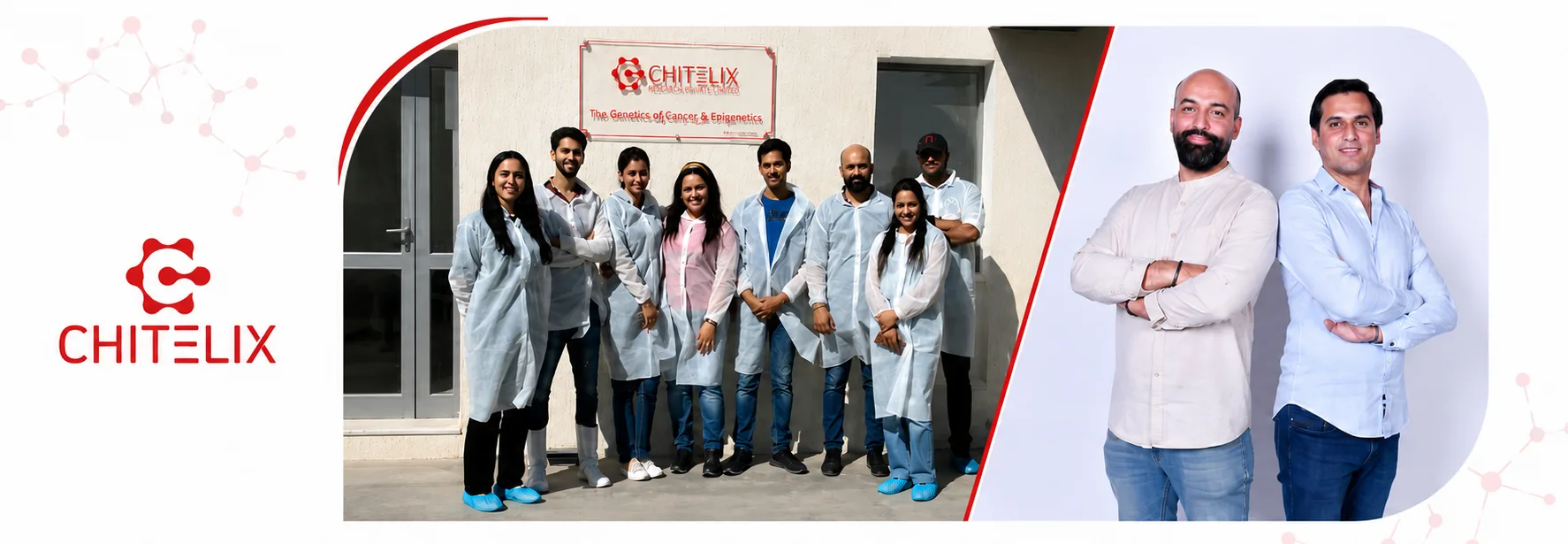
When I met Kais Aouaieb, co-founder of CHITELIX, over coffee at the BIGTECH Africa 2025 meeting space, I was not prepared for the scale of his ambition—or the simplicity of his insight. Tunisia, he explained, is living through a crab pandemic. Up to 50% of seafood is discarded, causing environmental damage and economic losses. CHITELIX has found a way to turn this waste into value.
He spoke with the clarity of someone who knows exactly what problem he is solving. His company transforms crab shell waste into fish feed and then into an astonishing range of high-value applications: agricultural inputs, calcium, wound-healing materials, baby diapers, and even research with implications for Parkinson’s disease. As he talked, I realised I needed to understand CHITELIX as a systems solution, not just a business.
At its core, CHITELIX is a circular biotech company that reimagines how waste, sustainability, and industry intersect. Their mission is grounded in one powerful idea: what we discard can be transformed into the building blocks of a regenerative future.
Each year, millions of tonnes of crustacean shells are discarded globally—polluting coastlines, harming ecosystems, and releasing greenhouse gases as they decompose. CHITELIX saw opportunity where others saw waste. What impressed me most was not simply the technology but the elegance of the solution. CHITELIX has developed a green chemistry process that transforms discarded crab shells into chitosan, a biodegradable biopolymer with applications across water treatment, agriculture, food production, packaging, and healthcare. In a world searching for alternatives to petroleum-based and chemically intensive materials, the implications are significant.
The environmental benefits are substantial. The process generates a carbon footprint around 70 per cent lower than conventional chemical alternatives while helping to reduce marine pollution. Their chitosan can remove microplastics, heavy metals, dyes, oils, and pathogens from water, offering a biodegradable alternative to the synthetic coagulants commonly used in treatment systems.
What I found particularly compelling was the circularity of the model. Nothing is wasted. Beyond chitosan, the biorefinery recovers calcium salts and amino acids, ensuring that every part of the shell is transformed into something useful. What begins as an environmental problem becomes a source of economic value.
The company also demonstrates how globally relevant innovation can emerge from local realities. By building a supply chain around Tunisia’s abundant marine waste, CHITELIX has created a solution with applications far beyond its home market.
Founded by childhood friends Anis Ben Ghalia and Kais Aouaieb, CHITELIX combines scientific expertise with entrepreneurial ambition. Their work has already attracted international recognition, including support from the World Economic Forum’s UpLink initiative and the WeMed Award, while helping secure $1.2 million to establish a production facility in Bizerte.
What struck me most about CHITELIX is that it represents a different vision of industrial development. Too often, sustainability is presented as a cost or a constraint. CHITELIX demonstrates the opposite. Here, environmental responsibility strengthens competitiveness, creates new markets, and generates economic value from resources that would otherwise be discarded.
The implications extend far beyond Tunisia. From water treatment and regenerative agriculture to healthcare and advanced materials, CHITELIX shows how local knowledge and scientific innovation can produce solutions to global challenges. The technology exists. The challenge now is securing the investment, partnerships, and scale needed to bring these solutions to wider markets.
As we talk, I become increasingly aware that this is not simply a business story. It is also a personal one.
When I ask Kais what drives him, his eyes fill with tears. He speaks about losing his father to COVID, a loss that forced him to re-evaluate his life and what he wanted to leave behind. What began as an entrepreneurial venture has become something deeper: a determination to build a legacy that outlives him.
That ambition is now driving the next phase of CHITELIX’s growth. At BIGTECH Africa, Kais is seeking strategic partners, investment for research and development, and opportunities to expand into pharmaceuticals, advanced materials, and Asian markets. His competitors may be in Europe, North America, and Canada, but his confidence is unwavering.
CHITELIX is living proof that deep-tech innovation in the Global South is not a future possibility. It is already happening.
That belief was recognised at BIGTECH Africa 2025, when CHITELIX received the ESG Prize following its participation in the ESG Workshop, delivered in partnership with OceanHub Africa and Katapult Ocean. The company is also a signatory of the SME Climate Hub Commitment and the UN Global Compact, embedding environmental and social responsibility into its growth strategy.
Yet awards and recognition are not what I will remember most about CHITELIX.
What will stay with me is the image of a founder who looked at a growing environmental problem and saw possibility. A company transforming waste into value. A business proving that innovation can regenerate ecosystems, create livelihoods, and strengthen communities at the same time.
This is the future the world needs: not growth at any cost, but growth that restores, renews, and leaves something better behind.
 Beyond Borders: Expansion Simplified
I arrived in Tunis after the longest and toughest flight of my life, a reminder that travel across the Global South remains unnecessarily complicated. The organisers had offered to fly me from London to Tunis—a simple three hours—but I was in India, in our home in the mountains of Dehradun, Uttarakhand. So began a 7-hour taxi ride to Delhi, followed by a midnight airport dash, a 4 am flight the following morning. Three hours later, we land in Dubai, with a two-hour layover to board the six-hour flight to Tunis!
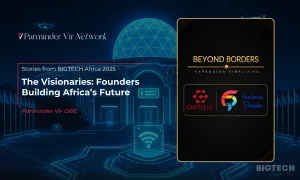
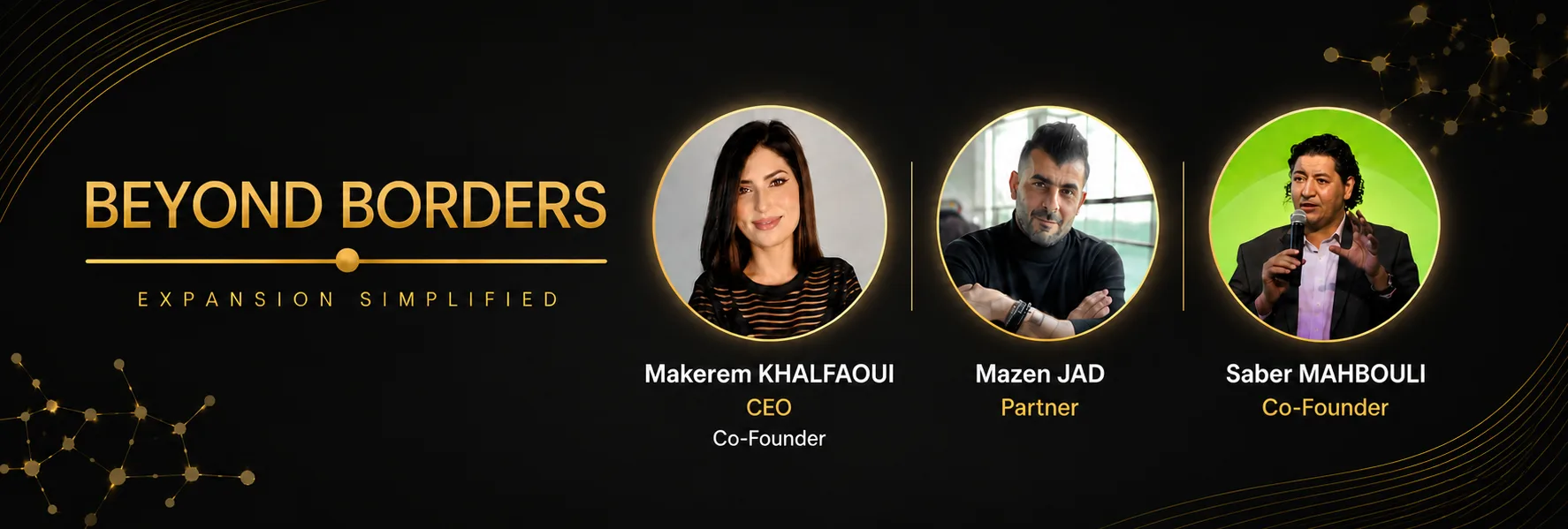
I was greeted by Mazen Jad, carrying a bouquet of red roses and Tunisian chocolates. I would later learn that he was a partner at Beyond Borders: Expansion Simplified, alongside Makerem Khalfaoui, the CEO and Co-Founder, and Saber Mahbouli, the Co-Founder. I met them all at the BIGTECH Africa welcome party and awards ceremony. They had watched BIGTECH Africa honouring me with an award and brought me to their table, where they were clearly having a party.
The following day, I met them at their BIGTECH Africa stand to learn more about Beyond Borders Expansion, their collective passion project. Saber Mahbouli, the CEO and Founder of the Sintegra Group, struck me as a dynamic force — full of energy, curiosity, and a deep passion for business development in Tunisia. With a background in international development and a career built around connecting Maghreb and African IT talent to global opportunities, he brings an entrepreneurial drive that is both ambitious and grounded in purpose. Through Sintegra, he has positioned himself at the intersection of talent mobility, digital skills, and the growing ESN sector, championing pathways that help Tunisian and African engineers access international markets. Our conversation revealed a founder who is not only committed to building his own ventures but also to shaping a stronger, more confident Tunisian tech ecosystem.
Saber has partnered with Makerem Khalfaoui, a co-founder of Beyond Borders Expansion. Makerem is young, ambitious, and stylishly dressed, and the face of Beyond Borders at their stand at BIGTECH, where we meet. She is a Tunisia-based ICF professional coach linked to business development and leadership coaching. The third member of the team is Mazen Jad, partner leading business development. Here were three smart, driven young people who are filling a vital gap in the market. Beyond Borders Expansion is your strategic gateway to global opportunities. Their current focus is on Saudi Arabia. She pointed to a Tunisian woman who was looking to move there. Beyond Borders will simplify the complex process by opening doors to this new market, even for Tunisians who speak the same language and share a common Arab heritage, setting up business across the Arab region can still be a challenge. Beyond Borders also operates across North Africa, the Gulf, and selected European markets, helping businesses navigate the practical realities of expansion. They focus on IT &tech, Cybersecurity, Recruitment, Real Estate, Education & Training, Hospitality, Healthcare, and digital content creation.
Listening to her took me back to early 2008, when I did something similar for nearly 5 years as a consultant. My focus was on connecting UK businesses to emerging markets, especially India and vice versa. I was the founding director of the UK India Business Council, established in 2004 with UK government funding to support business exchange between the United Kingdom and India. My sector focus was film and television production, the creative industries, and later, education. For five years, I was immersed in endless meetings and presentations about the opportunities for UK companies in India. The Indian, on the other hand, did not need persuading; they leveraged the vast NRI network, saw the opportunities, and made quick decisions, while UK companies wasted opportunities because they took too long between meetings and signing. The challenge was understanding each other’s needs, positioning, readiness, and developing a market-entry plan. It was like pushing water uphill. While I found the work challenging at times, Makerem, Saber and Mazen were clearly passionate about their mission and seemed to be having so much fun doing it.
They are so entrepreneurial. Their approach to market entry is simple:
- Diagnose – understand the client’s needs, positioning, readiness, and growth plan.
- Design – create a custom international expansion and scaling blueprint.
- Deploy – match the client with the right opportunities and build momentum with them.
They remove the guesswork, bring a curated, high-value network to deliver real business value, and bridge not only business borders but also cultures, helping clients adapt their propositions and communications for maximum impact. The emphasis is on understanding local realities rather than applying a single, templated plan.
As I listen to their enthusiasm for connecting, facilitating, and enabling business partnerships, I wonder what percentage of their clients are from the region seeking opportunities, and which are from the western world seeking market entry into the region. Beyond Borders Expansion is a much-needed service as the African continent looks inward for business development, scale and growth. If you are an enterprise or a professional from the Maghreb and Africa looking to expand, I highly recommend connecting with this team and leveraging their understanding of the unique, “messy,” uneven terrain of local markets, because success depends on on-the-ground knowledge of the target environment. Working with them, you will learn the importance of strategic flexibility and agility – businesses need to be adaptable and willing to adjust plans, timelines and even their core approach based on continuous learning from the new market. In essence, it is about moving from merely selling in a new market to becoming a genuinely integrated, locally relevant player. This process requires careful planning, local insights, and adaptability.
As I reflect on these three founders, I am reminded that entrepreneurship is never just about building companies. It is about seeing possibilities where others see obstacles. Wajih Hajji is redefining how African expertise is valued. Kais Aouaieb is transforming waste into a resource for a more sustainable future. Markerem Khalfaoui, Saber Mahbouli, and Mazen Jad are helping businesses navigate the complex terrain of new markets and opportunities.
Different sectors. Different business models. Different ambitions. Yet all three embody the same entrepreneurial instinct: the determination to solve problems, create value, and imagine a future that does not yet exist.
They are the reason I left Tunis optimistic. Africa’s future will not be shaped solely in government offices, boardrooms, or international summits. It is being built every day by founders like these, whose ideas, resilience, and courage are quietly reimagining what is possible.
Parminder Vir OBE
Ambassador, India-Africa Tech & Startup Bridge: BIGTECH Africa 2026
Entrepreneurship Expert, Oxford Saïd Entrepreneurship Centre
Former CEO, Tony Elumelu Foundation