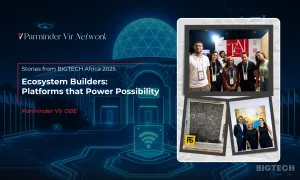
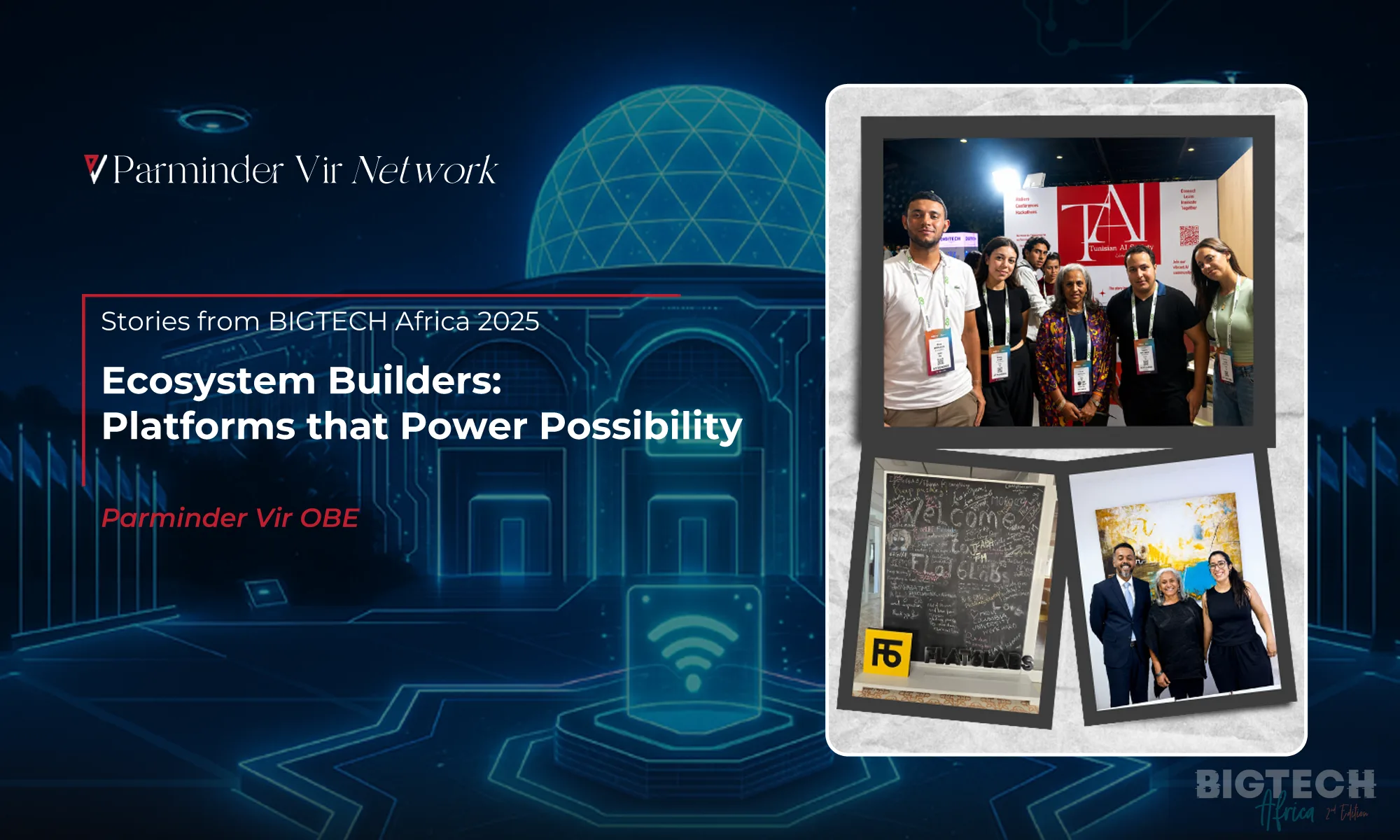
At BIGTECH Africa 2025, I met leaders shaping the next phase of Africa’s innovation ecosystem—not through grants or traditional incubation, but through collaboration, platforms, and partnerships that power possibility.
One of them was Bariq Rifki Abdoulkandar, Managing Director of Djibouti International Startup City, a seasoned diplomat and Global Shaper with the World Economic Forum. With over fifteen years of experience in digital strategy, marketing, and communication, Bariq has helped shape Djibouti’s national digital strategy for economic growth, social inclusion, and environmental sustainability.
Bariq believes the old model of entrepreneurship development, built on grants, hackathons, and incubators, is no longer enough. His Venture Client Model flips the traditional accelerator on its head: instead of nurturing startups in isolation, it connects them directly with clients facing real problems. In this approach, large companies act as venture clients, buying or licensing solutions from startups to meet concrete business challenges. “You don’t need to be incubated anymore,” he told me. “You need to be connected to networks, mentors, investors, and clients who trust your innovation.” He came to BIGTECH Africa leading a Djiboutian delegation with a clear purpose: to learn, to connect, and to build partnerships that could translate knowledge into action.
We spent a day together meeting the driving forces behind Tunisia’s startup ecosystem—from Our Digital Future (ODF) and its biotech arm Applied Biotech & Innovation (ABI) to Flat6Labs and the Tunisia AI Society. What I discovered was a powerful convergence between deep-tech ambition and market reality.
Our Digital Future & Abi
Building Africa’s DeepTech and Biotech Ecosystem
Our Digital Future (ODF), founded by Noomane Fehri, former Tunisian Minister of Communication Technologies and Digital Economy, is one of the anchors of this ecosystem. Fehri, who established Tunisia’s landmark Startup Act—the first of its kind in Africa and now a model for over ten countries—continues to shape policy and practice through ODF’s pan-African mission. With operations spanning Europe and five African countries, ODF bridges the gap between research and industry, helping scientists and entrepreneurs transform lab discoveries into viable businesses.
As Dr Marwa Louati, ODF’s Chief Business Officer, explained, the organisation’s focus is on research valorisation, technology assessment, and venture readiness. Their teams design programmes that train researchers, build business models, and prepare startups for fundraising, all within an integrated ecosystem that includes universities, corporates, and investors. Since its inception in 2016, ODF has supported over 100 startups, trained 1,000 researchers, and worked with more than 200 research institutions to anchor Africa in the global knowledge economy.
As we talked, I thought to myself that ODF is so lucky to have this talented young woman—a molecular biologist by training—now shaping Tunisia’s innovation landscape. Within an hour of conversation, I felt an immediate connection with her: a brilliant, thoughtful mind equally grounded in research and entrepreneurship. Marwa later shared that she had told Noomane Fehri of my visit to ODF’s offices. Our paths had first crossed in 2018, during my tenure as CEO of the Tony Elumelu Foundation (TEF). On hearing of my visit, he encouraged her to enlist my support for ODF’s fundraising efforts — a gesture that spoke of continuity and trust.
Marwa also wrote about her plans to expand ODF’s reach to Abu Dhabi, where she lives part of the year, and asked for my mentorship as she explores new collaborations. Her sincerity and ambition stayed with me — a reminder that the true strength of BIGTECH Africa lies not only in the formal sessions and panels, but in these quiet moments of human connection, where purpose meets possibility and networks come full circle.
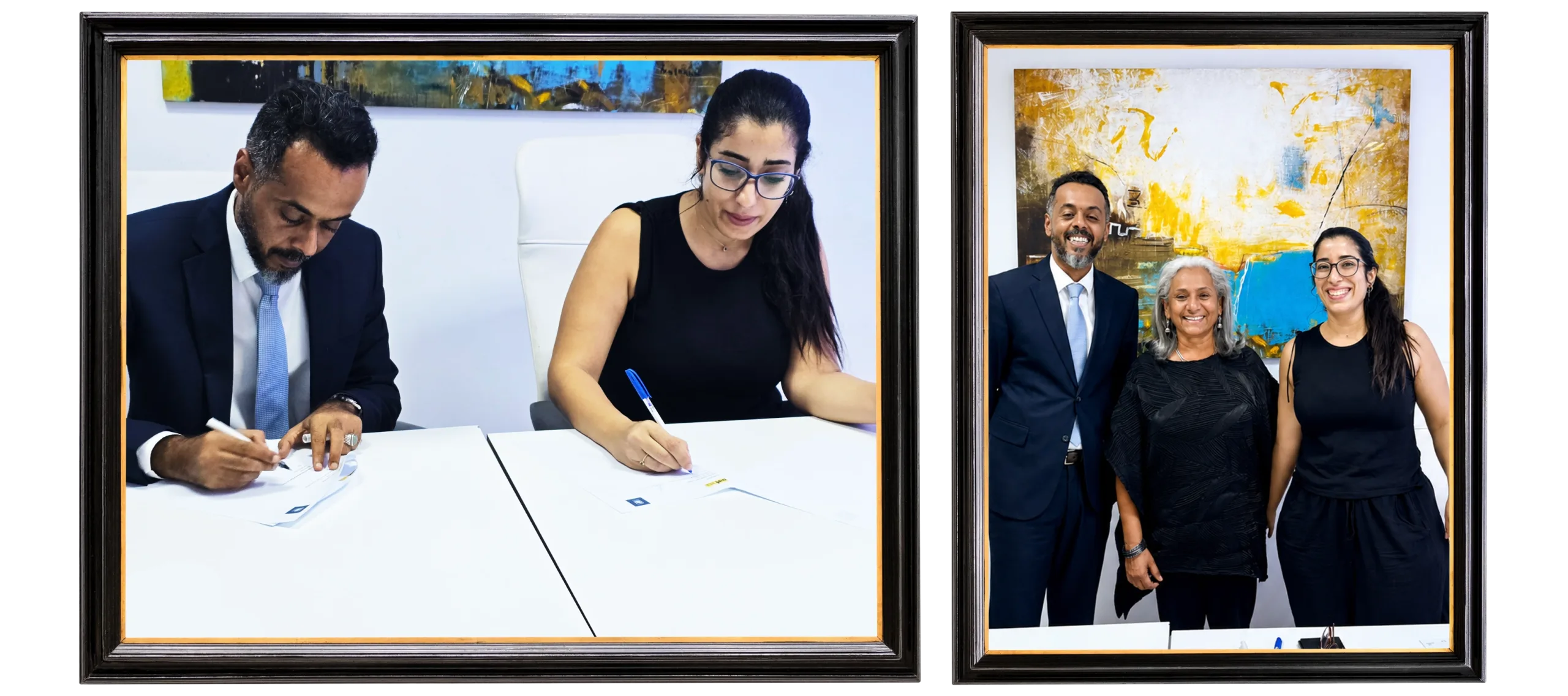
Under the ODF umbrella sits Applied Biotech & Innovation (ABi), led by Mohamed Ben Mahmoud. ABi embodies Tunisia’s growing strength in biotechnology and life sciences, supporting early-stage projects—sometimes even before they reach Technology Readiness Level 3—if they demonstrate strong scientific merit and societal impact. Acting as a tech-transfer and maturation hub, ABi helps innovators move from concept to prototype, guiding them through proof of concept, investor readiness, and market validation.
Together, ODF and ABi illustrate the next generation of African ecosystem builders: locally rooted, globally connected, and impact-driven. Their model echoes Bariq’s vision in Djibouti —an innovation platform built not on charity or competition but on collaboration, venture partnerships, and shared purpose.
As we moved between these institutions, a clear truth emerged. Africa’s new accelerators are not physical buildings but living networks of researchers, entrepreneurs, investors, and policymakers, all co-creating the continent’s deep-tech future.
Flat6Labs Tunisia
Building Africa’s Next Generation of Entrepreneurs
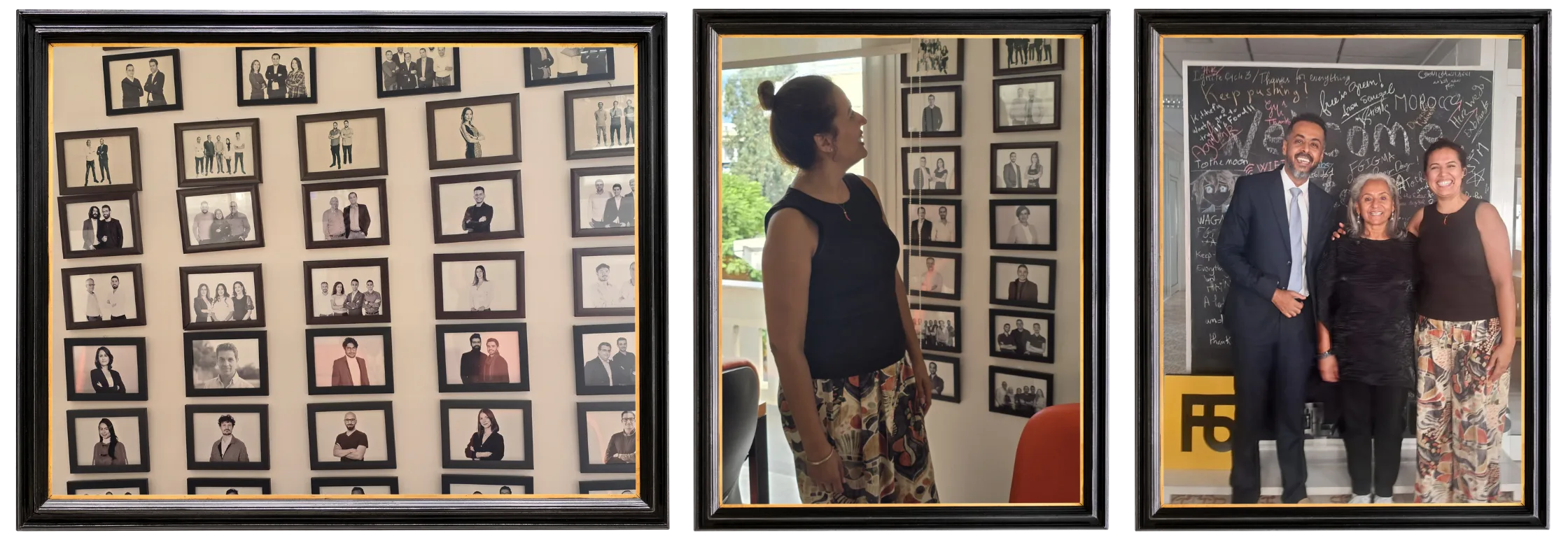
From the heart of Tunis, in a modern office on Avenue de Carthage, Flat6Labs Tunisia is shaping the next wave of African entrepreneurship. Bariq and I were welcomed by Faten Aissi, Director of Global Partnerships.
The conversation quickly revealed why Flat6Labs has become one of the most respected accelerators in the Middle East and Africa: it is not just a programme but a platform that connects talent, capital, and knowledge.
Founded in 2011 by Ahmed El Alfi and Hany Al Sonbaty of Sawari Ventures in Egypt, Flat6Labs began as a bold experiment to reimagine what an accelerator could be. Rather than serving as a funding mechanism, it was designed as a development model that provides seed investment, structured mentorship, and a gateway to regional and global investor networks. Over time, it evolved into a cornerstone of ecosystem building across MENA.
Flat6Labs Tunisia, launched in 2016 under the leadership of Yehia Houry, arrived in Tunisia before the country had a mature startup ecosystem. As Faten told us, they spent nearly eighteen months travelling across the country, introducing concepts like accelerators, incubators, and venture capital to entrepreneurs, universities, and even government officials. “Before the Startup Act,” she said, “we first had to teach everyone what a startup was.”
That groundwork paid off. When applications opened in 2018, Flat6Labs became the bridge between government support and private capital, accelerating the implementation of the Startup Act that would later position Tunisia as a continental leader in entrepreneurship policy. With EU support, Flat6Labs helped build the capacity of public administrators, showing them how to support incubators, accelerators, and startups.
Today, Flat6Labs Tunisia continues to advance this legacy. Its model combines development, training, and investment, aligning with national and regional goals for economic diversification and youth empowerment. Bariq was particularly interested in how this could be translated into practice in Djibouti. With only one public university and limited IT education, he saw in Flat6Labs a potential partner for capacity building. “We need champions to inspire the next generation,” he said. “In Djibouti, I had to start clubs on WhatsApp because we lacked spaces for young people to connect and learn.”
Faten responded with characteristic enthusiasm. Flat6Labs, she explained, brings knowledge and structure; partners bring funding to sustain programmes. Together, they create a model adaptable to any African context. Plans are already underway for East Africa Bootcamps, with Ethiopia in 2025 on the horizon, and Bariq expressed his intention to secure funding to bring Flat6Labs to Djibouti.
The story of Flat6Labs is one of scale through substance. From its beginnings in Egypt, it has expanded to Tunisia, Saudi Arabia, Bahrain, Jordan, Morocco, Lebanon, Iraq, UAE, Palestine, and Pakistan, adapting its model to each local ecosystem while staying true to its mission: empowering innovative founders to build resilient, high-growth companies.
What makes Flat6Labs distinctive is its philosophy. It balances financial investment with human and social capital—mentorship, training, and networks—ensuring that startups are not only funded but also equipped to survive in the real world. Programmes such as the Green Growth and Jobs Accelerator Project (GGJAP) exemplify this approach, enabling startups to address sustainability challenges while creating employment and value.
The Tunisian programme, powered by local leaders like Faten Aissi, continues to drive the spirit of innovation that now defines Tunisia’s economy. As I left the offices that afternoon, I reflected on how far Tunisia’s startup landscape has come in less than a decade. From teaching the government what an accelerator is to mentoring hundreds of founders and building cross-border partnerships, Flat6Labs Tunisia stands as proof that when vision meets persistence, ecosystems can transform nations.
Tunisia AI Society
Building a Human Centred Tech Future
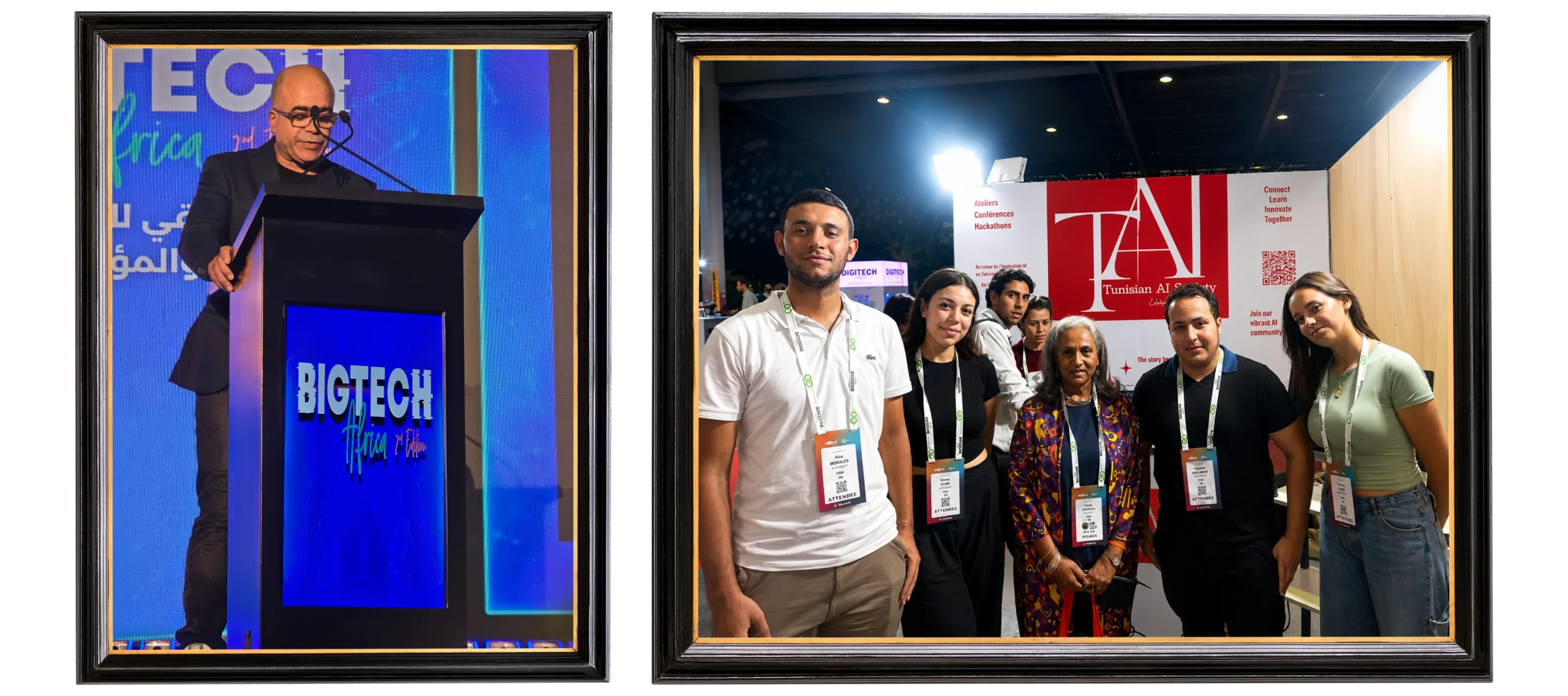
The day before I visited with Bariq, I was invited by Sami Ayari, co-founder of the Tunisia AI Society, to meet the students and hear their aspirations at the Tunisia AI Society’s stand at BIGTECH Africa. Students spoke passionately about how artificial intelligence could transform not only their careers but their country. They saw AI as a means to solve real problems: improving healthcare, modernising education, protecting the environment, and strengthening governance. Their questions were thoughtful, their curiosity immense.
The Tunisia AI Society stands at the intersection of research, innovation, and public engagement. It brings together universities, government agencies, and private companies to promote AI literacy, foster research collaboration, and champion responsible innovation. In many ways, it embodies Tunisia’s broader ambition to become a continental leader in ethical, human-centred technology.
What struck me most was their focus on AI for social good. Rather than chasing trends, the Society aims to build capacity—to equip young Tunisians with the skills, confidence, and ethical grounding needed to harness technology for public benefit. Sami and his team understand that AI is not just about algorithms and data; it is about people, creativity, and collective intelligence. That same spirit was on display as policymakers, students, and entrepreneurs mingled, discussing new research, potential partnerships, and the role of AI in Africa’s next chapter of growth. Tunisia is not merely adopting global technologies; it is defining its own AI narrative, grounded in inclusion and local relevance.
The Tunisia AI Society is more than an association. It is a movement of thinkers, builders, and dreamers shaping a human-centred tech future. Watching the students present their projects, I felt a quiet conviction: Tunisia is not just hosting Africa’s AI story—it is helping to write it.
Reflection: From Ecosystems to Economies of Possibility
What I witnessed in Tunisia is more than a collection of successful institutions; it is the architecture of a new economic imagination. Each platform — ODF, ABi, Flat6Labs, and the Tunisia AI Society — demonstrates how collaboration, rather than competition, drives innovation. They are proving that Africa’s next generation of entrepreneurs, scientists, and creators do not need to leave to lead.
These ecosystem builders are redefining what it means to grow an economy. They start not with capital but with connection — between research and markets, between ideas and institutions, between young talent and global opportunity. Theirs is a model of possibility powered by partnership, one that can inspire similar transformations across the continent.
Leaving Tunisia, I carried with me the conviction that the continent’s most valuable resource is not its natural wealth but its human ingenuity. When ecosystems like these thrive, they do more than create startups — they build societies equipped to imagine and invent their own futures.
Parminder Vir OBE
Ambassador, India-Africa Tech & Startup Bridge: BIGTECH Africa 2026
Entrepreneurship Expert, Oxford Saïd Entrepreneurship Centre
Former CEO, Tony Elumelu Foundation