Last September, during BIGTECH Africa in Tunisia, I found myself in a series of conversations that stayed with me long after the event had ended. The discussions ranged from startups and artificial intelligence to digital infrastructure, investment, industrial policy, and entrepreneurship. Yet beneath the diversity of topics, a recurring theme kept surfacing: why were India and Africa not working together at a much greater scale? It was not a new thought.
Over the past decade, I have lived and worked across two worlds. As CEO of the Tony Elumelu Foundation, I spent five years in Lagos helping to build one of Africa’s largest entrepreneurship programmes and travelling extensively across the continent. At the same time, I was spending increasing amounts of time in India, observing the extraordinary transformation taking place across its technology, startup, and digital ecosystems.
This wasn’t new to me. In fact, between 2000 and 2013, I devoted much of my professional life to strengthening relationships between the United Kingdom and India through my work with the UK India Business Council, the UK Film Council, and the Department for Culture, Media and Sport. I saw firsthand how institutions, networks, and sustained engagement can transform relationships between countries.
Looking at Africa and India today, I find myself asking whether a similar opportunity exists. My recent essay, Africa and India: The Future of Innovation, explored why I believe one of the most important relationships of the twenty-first century may emerge between these two regions.
Since publishing that essay, I have become increasingly interested in a different challenge. If the opportunity for an India-Africa Innovation is real, what would it take to translate possibility into action? How do we move from recognising the potential of the relationship to building the partnerships, institutions, and networks capable of realising it?
Building the First Bridge
Before considering what comes next, it is worth recognising how much has already been achieved between India and Africa.
Over the past two decades, India and Africa have steadily strengthened their relationship through trade, diplomacy, education, development cooperation, and business investment. India is now among Africa’s largest trading partners. Educational exchanges have expanded, while Indian companies operate across sectors ranging from healthcare and agriculture to manufacturing, technology, and infrastructure.
Political engagement has deepened as well. Prime Minister Narendra Modi has elevated Africa within India’s foreign policy priorities, while African leaders have become increasingly visible participants in India–Africa summits, bilateral engagements, and G20 discussions.
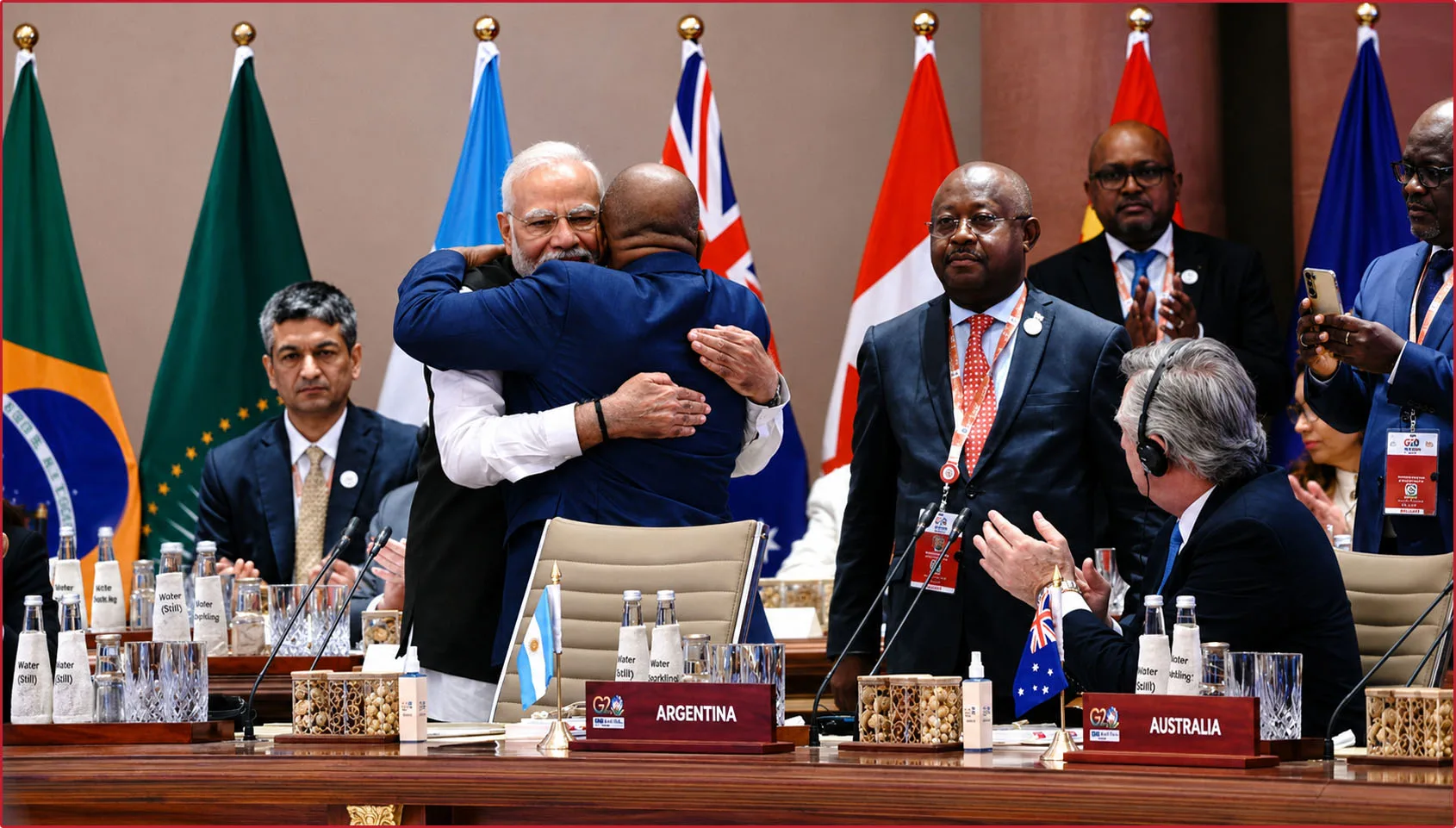
For me, the most significant moment came in 2023 during India’s G20 presidency. Watching Prime Minister Modi welcome the African Union as a permanent member of the G20, I sensed a shift taking place. For decades, Africa had been underrepresented in the world’s most important economic forums. The inclusion of the African Union was more than a diplomatic gesture. It was recognition that Africa belongs at the centre of global conversations about growth, technology, climate, finance, and the future of the global economy.
The political foundations are stronger than at any point in recent history. Governments are talking to one another, trade continues to expand, and businesses are investing across both regions. In many respects, the first bridge between India and Africa has already been built.
Yet as I reflected on these developments, I found myself returning to the worlds I know best: entrepreneurship, innovation, and ecosystem building. It was there that I began to see a different picture emerge.
What I Wasn’t Seeing
My own experience suggests that the connection between India and Africa’s innovation ecosystems remains far weaker than it should be. From 2015 onwards, I represented the Tony Elumelu Foundation at major entrepreneurship summits and ecosystem gatherings across Africa. There, I met delegates from Europe, North America, Japan, South Korea and, increasingly, China. Yet I rarely encountered representatives from India’s innovation and startup ecosystems.
This struck me as odd. India had become one of the world’s most dynamic startup economies, while Africa was experiencing an extraordinary entrepreneurial awakening. Both regions were grappling with similar challenges and opportunities, yet their innovation ecosystems seemed largely unaware of one another.
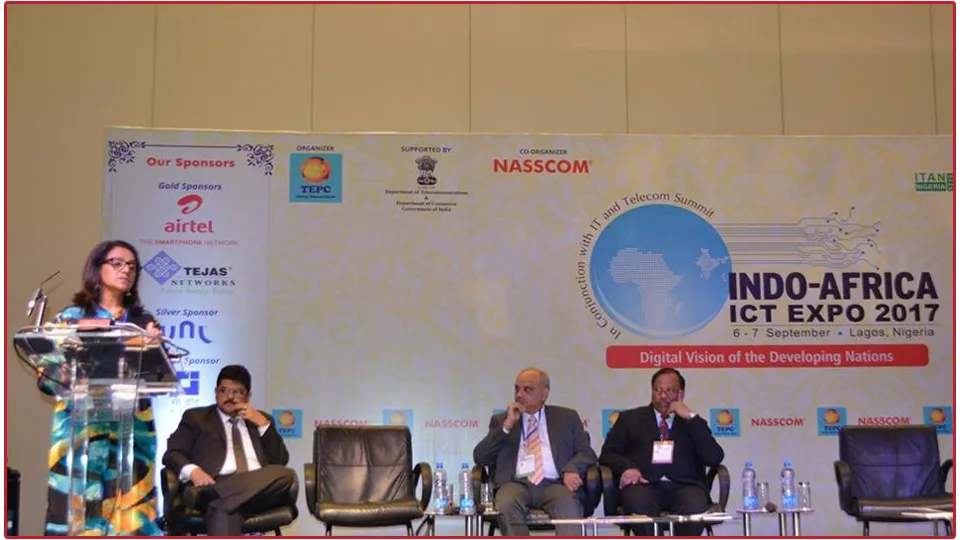
There were, of course, positive exceptions. In 2017, I accepted an invitation to speak at the Indo-Africa ICT Expo in Lagos on the role of digital innovation and cross-sector partnerships in Africa’s economic transformation. It remains one of the few occasions during my years at TEF where I witnessed a deliberate effort to connect African and Indian innovation communities.
The disconnect surfaced again in unexpected ways. In 2018, I was interviewed by an Indian journalist interested in writing about entrepreneurship in Africa. The conversation quickly narrowed to one question: which Indian entrepreneurs could she feature in the story?
I remember feeling frustrated. Here was a continent experiencing one of the most significant entrepreneurial awakenings in its history, yet the lens remained fixed on India rather than the opportunity for mutual learning and exchange. Yet India’s presence in Africa was impossible to miss.
While living in Lagos and travelling extensively across the continent, I met members of Africa’s longest-established Indian communities as well as more recent arrivals. Indian companies were active in healthcare, education, manufacturing, pharmaceuticals, agriculture, and technology services. In many countries, Indian professionals occupied senior positions in banks, corporations, and industrial enterprises.
I remember attending Nigerian weddings and admiring the intricate beadwork woven into the fabrics worn by women. When I asked where the embroidery was done, the answer surprised me: Mumbai. Entire supply chains already connected communities and markets across the Indian Ocean, often invisibly. I was, of course, reminded of the impact of Bollywood as I travelled across the continent, hearing young and old name the leading Bollywood stars and sing Lata Mangeshkar and Mohammed Rafi songs to me.
Why This Moment Matters
The more I travelled, the more I realised that the relationship already existed. What was missing was a stronger, two-way exchange between entrepreneurs, innovators, investors, universities, and startup ecosystems. In many ways, governments and businesses had moved faster than the innovation communities themselves.
That gap matters because Africa and India are exploring this opportunity at a moment when the global economy is being reshaped by forces that will define the next generation of growth and development. Artificial intelligence is transforming industries. Digital public infrastructure is becoming as important as roads, ports, and power stations. Countries are rethinking supply chains, industrial policy, technological sovereignty, and talent development in response to a rapidly changing world.
At the same time, demographic and economic power is shifting. The next billion digital users will come largely from Africa and Asia, making these regions central to the future of technology adoption and innovation. Increasingly, the question is not who can invent the next technology, but who can deploy it at scale, make it accessible, and adapt it to local realities.
India has demonstrated that it is possible to build population-scale digital systems capable of serving hundreds of millions of citizens at remarkably low cost. Through initiatives such as Aadhaar, UPI, and India Stack, it has developed models that are attracting attention across the Global South.
What makes these developments particularly relevant for Africa is that they address challenges familiar to many developing economies: financial inclusion, digital identity, access to public services, and the efficient delivery of government programmes. Increasingly, African governments are exploring how digital public infrastructure can support economic development and citizen services at scale, while adapting these models to their own national realities.
Africa, meanwhile, has become one of the world’s most dynamic laboratories of entrepreneurial innovation. Across fintech, climate technology, agritech, logistics, healthcare, and digital commerce, entrepreneurs are building solutions adapted to local realities and often leapfrogging legacy systems in the process.
Beyond Trade
As I look at the trajectories of Africa and India, I am struck by how much they have in common. Both are navigating the challenges of inclusion, affordability, infrastructure deficits, youth employment, and rapid urbanisation. Both have learned to innovate under constraints, often finding ingenious solutions where others see only obstacles. These shared realities create the basis for a different kind of partnership-one rooted not in dependency, but in mutual learning and co-creation.
It is here that the relationship between Africa and India has the potential to evolve beyond its traditional foundations.
For decades, progress has been measured largely through trade volumes, investment flows, development partnerships, and diplomatic engagement. These remain important and will continue to shape the relationship. Yet the forces driving economic growth in the coming decades are likely to look very different.
Digital identity, digital payments, artificial intelligence, climate technologies, advanced manufacturing, data systems, and skills development are rapidly becoming the foundations of economic competitiveness. The countries and regions that prosper will not simply import these capabilities; they will develop, adapt, and scale them in ways that respond to their own realities.
This is why I believe the next phase of the Africa–India relationship must be centred on co-building rather than simple exchange. The opportunity is not for Africa to replicate India’s experience, nor for India to export ready-made solutions into African markets. It lies in combining Indian experience in scaling systems with African ingenuity in adapting solutions to diverse and rapidly changing environments.
The possibilities are considerable. They range from digital public infrastructure designed for African contexts and AI systems trained in African and Indian languages, to joint ventures in climate technology, agriculture, healthcare, manufacturing, and mobility. They include new investment corridors connecting African scale-ups with Indian capital, expertise, and market access, as well as stronger links between universities, research centres, incubators, and entrepreneurs working to solve common challenges.
These possibilities are no longer theoretical. Much of the technological foundation already exists. What remains is the institutional architecture capable of connecting people, ideas, capital, and opportunity across both regions.
From Vision to Execution
It was the reflections above that led me to accept an invitation to serve as Ambassador for the India–Africa Tech & Startup Bridge, an initiative anchored within BIGTECH Africa 2026 in Tunis.
What interested me was the ambition to address a more fundamental challenge: how to move from conversations to collaboration, from announcements to execution, and from fragmented engagements to more structured and sustained partnerships. Africa and India already have no shortage of conferences, summits, and business forums.
Throughout my career, whether in the arts, film, public policy, or entrepreneurship, I have seen that ideas alone are rarely enough. Progress depends on institutions, networks, and platforms capable of bringing people together around shared goals and practical opportunities.
The India–Africa Tech & Startup Bridge is designed to foster a two-way exchange of ideas, talent, investment, and innovation. Its focus is not simply on dialogue, but on creating pathways for entrepreneurs, investors, universities, corporations, and public institutions to engage with one another in more purposeful ways.
India brings deep experience in technology, digital systems, manufacturing, and entrepreneurship. Africa brings youthful talent, rapidly expanding markets, and remarkable entrepreneurial energy. The opportunity lies in connecting these strengths through partnerships that create value for both regions.
Like any ambitious initiative, its success will depend on the quality of its execution. But the broader opportunity it seeks to address is real and growing.
Building the Two-Way Innovation Bridge
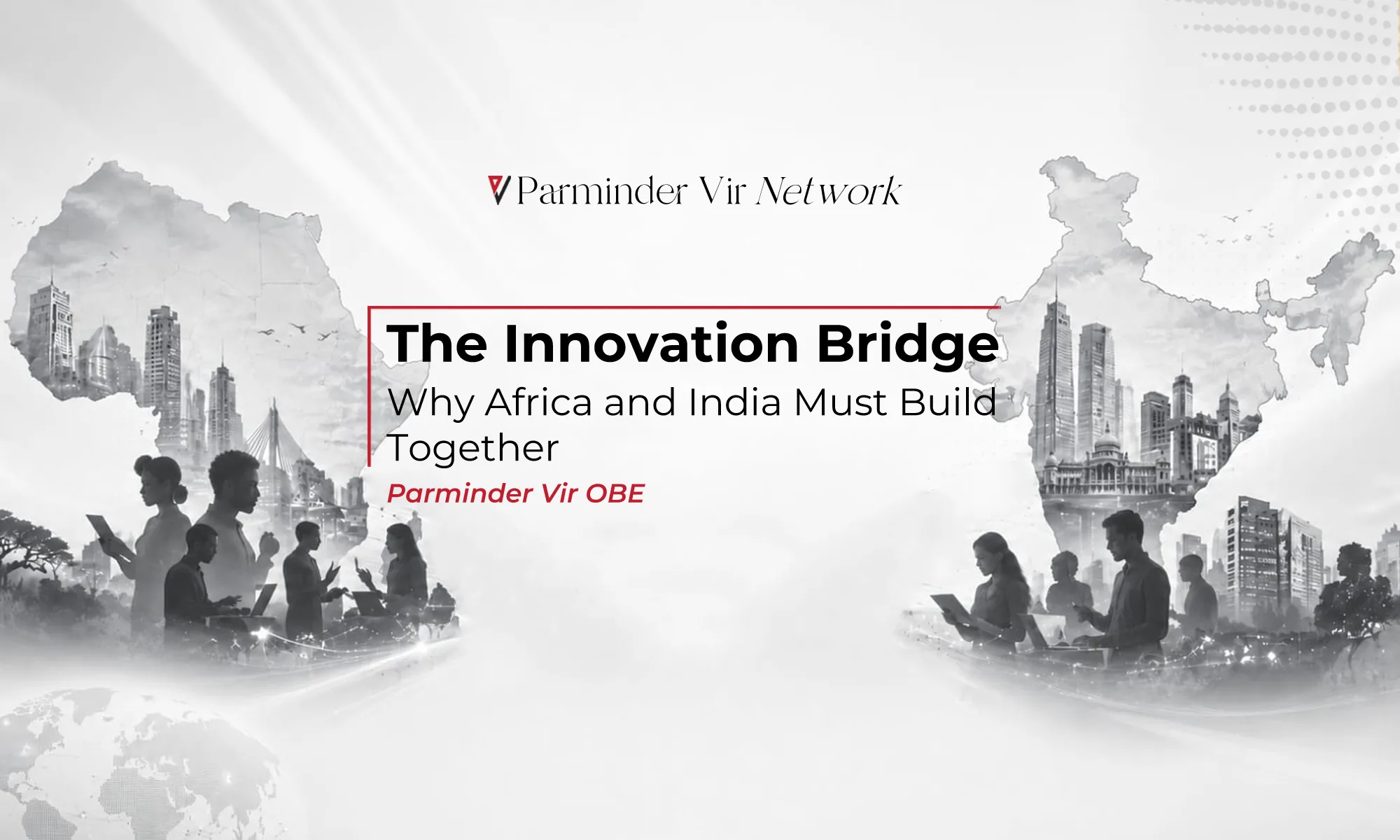
As I reflect on the relationship between Africa and India, I increasingly see it as the story of two bridges.
The first bridge has already been built. It was constructed over decades through diplomacy, trade, education, migration, and people-to-people connections. Governments negotiated agreements. Businesses opened markets. Diaspora communities established roots and created commercial and cultural links that continue to connect both regions today.
That bridge matters because it created the foundations on which the next phase of the relationship can be built.
But a second bridge now needs to be built.
This bridge will look very different from the first. It will be built not only by governments and corporations, but by entrepreneurs, innovators, investors, researchers, universities, and technology leaders. It will be built through collaboration rather than transactions, through shared ventures rather than one-way exchanges, and through long-term relationships rather than short-term projects.
The encouraging news is that many of the foundations already exist. The political relationship is stronger than at any point in recent history. Trade continues to expand. Both regions have vibrant entrepreneurial ecosystems and a growing recognition that innovation, talent, and technology will shape future prosperity.
What remains is to connect these strengths with greater intention and purpose. The bridge does not yet fully exist, but the foundations are already in place. The challenge now is to build upon them with the same ambition that has characterised the relationship’s political and commercial evolution.
That, I believe, is the opportunity before us.
Parminder Vir OBE
Ambassador, India-Africa Tech & Startup Bridge: BIGTECH Africa 2026
Entrepreneurship Expert, Oxford Saïd Entrepreneurship Centre
Former CEO, Tony Elumelu Foundation