A decade ago, Africa’s entrepreneurship ecosystem was powered by philanthropy, development finance institutions, and donor-led initiatives. Foundations such as the Tony Elumelu Foundation, the Mastercard Foundation, and the African Development Bank’s Youth Entrepreneurship Fund trained and funded thousands of entrepreneurs. But they also created a dependency—entrepreneurs pitching to donors rather than markets.
It was a necessary first wave: a foundation built on belief and benevolence. But that era is fading. A new generation of catalysts is emerging in corporations that no longer write cheques out of charity but sign contracts out of conviction. The future belongs to those who treat African startups not as beneficiaries but as partners: integrated, embedded, and indispensable to their supply chains.
From Ecosystem Building to Market Building
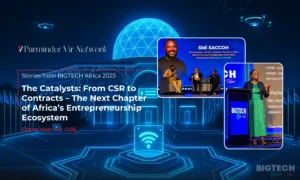
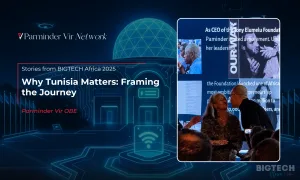
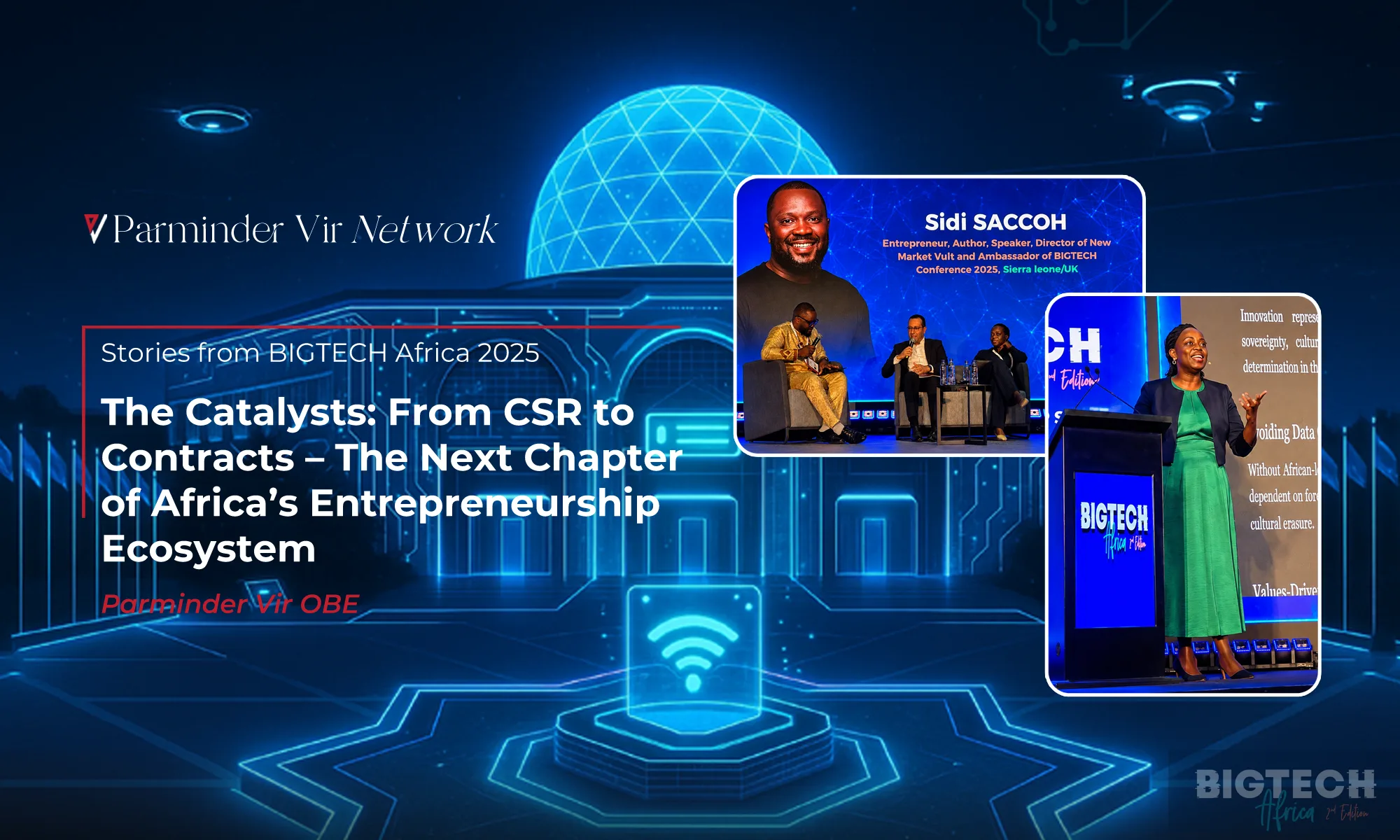
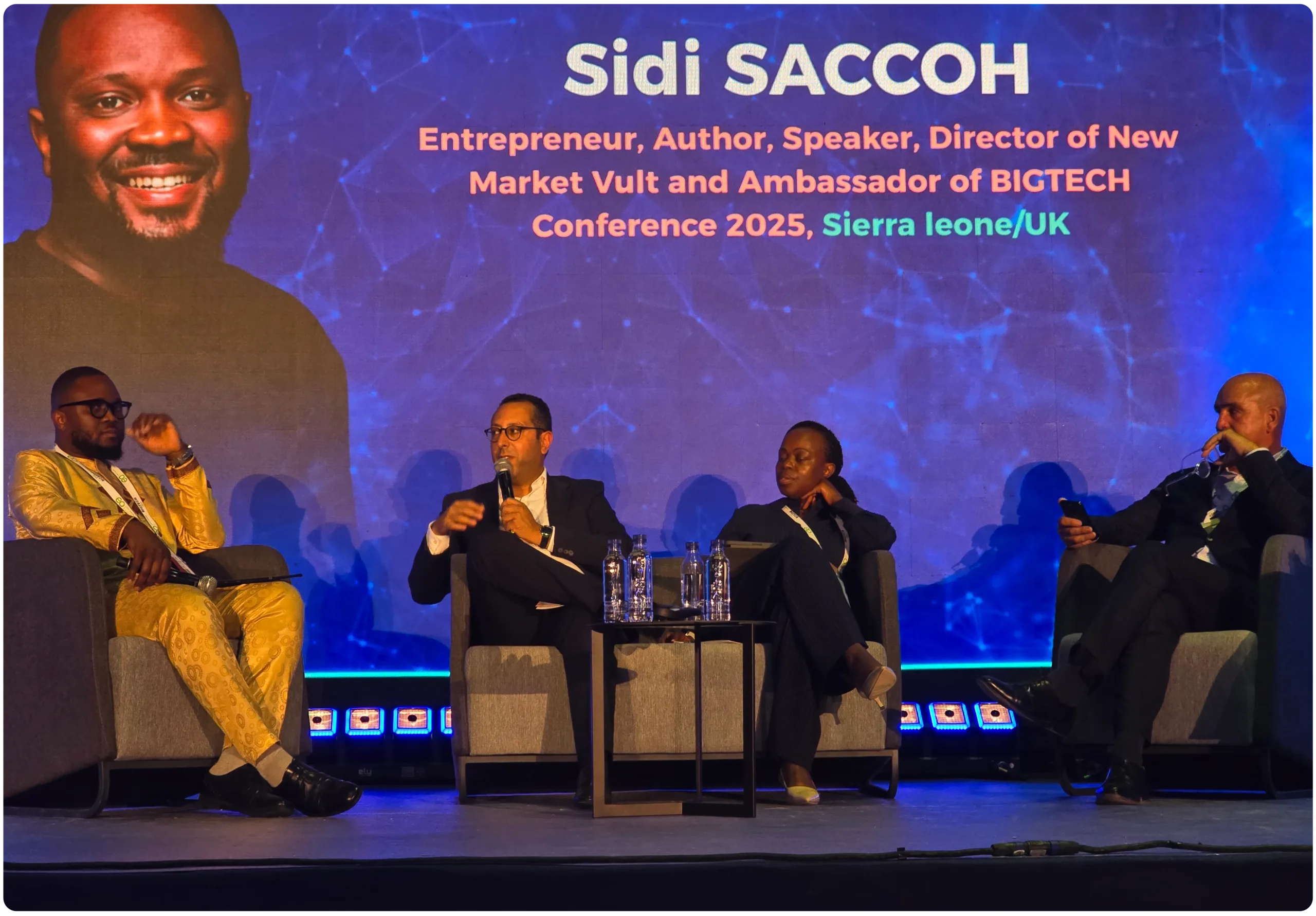
At BIGTECH Africa in Tunis, I saw this new reality unfold. Sidi Saccoh, Ambassador of the Summit and then the Managing Director of Vult – Pay. Save. Go., chaired a panel on Leapfrogging with Constraints: Turning Africa’s Challenges into Global Advantages. His panel explored how acceleration and incubation models are reshaping Africa’s AI and innovation ecosystem.
I was in Tunis because Sidi himself had proposed my name to the organisers, a gesture that reflected his collaborative spirit and his recognition that ecosystem building is collective work.
The conversation struck close to home. Having designed and implemented one of the most extensive pan-African entrepreneurship programmes – built from the ground up, by Africans for Africans – I was keen to hear how the ecosystem has evolved. In 2014, when the Tony Elumelu Foundation launched its programme, only a handful of accelerators existed across the continent. Today, every major city boasts multiple hubs, labs, and incubators.
The question is no longer how to build an ecosystem – it’s what kind of an ecosystem Africa needs next.
The Global Models Arrive
Among Sidi’s panellists was Yves Cabanc, Managing Director of Plug and Play, one of Silicon Valley’s largest global innovation platforms. Plug and Play connects startups with corporations, governments, and investors, providing funding, mentorship, and most importantly, access to markets. Over the past decade, it has expanded into Morocco, South Africa, and Tunisia, targeting fintech, healthtech, agritech, and mobility sectors.
Its power lies in integration: embedding startups into corporate value chains, not just funding them. Yet as these global innovation engines set up across Africa, the question remains: can their models truly serve the continent’s realities?
Avoiding the Copy-Paste Trap
Even as global players like Plug and Play expand into Africa, I remain cautious. Imported models risk parachuting in solutions that don’t fit local realities. Ecosystem building cannot be outsourced. The scaffolding may be global, but the foundations must be African — rooted in the continent’s economic, social, and cultural contexts.
This is where Sidi Saccoh’s leadership resonates. He reminded us that Africa’s advantage lies in its constraints. “Africa does not lack opportunities,” he said. “It has an abundance of problems waiting to be solved. What is often missing is the right approach to tackling them.”
His words echo the spirit of countless African entrepreneurs who innovate not in spite of limitations, but because of them.
Also on the panel were Kendi Ntwiga, a global technology executive who has led teams at Meta, Microsoft, Oracle, HP, and Check Point, and Aymen Mtimet, Advisory Partner at Deloitte Afrique Francophone. Together, they dissected the next phase of Africa’s innovation story.
The consensus was clear: the continent’s strength lies not in replicating Silicon Valley, but in leveraging its constraints as advantages—speed, adaptability, and the ability to innovate out of necessity.
A Passport for Innovation
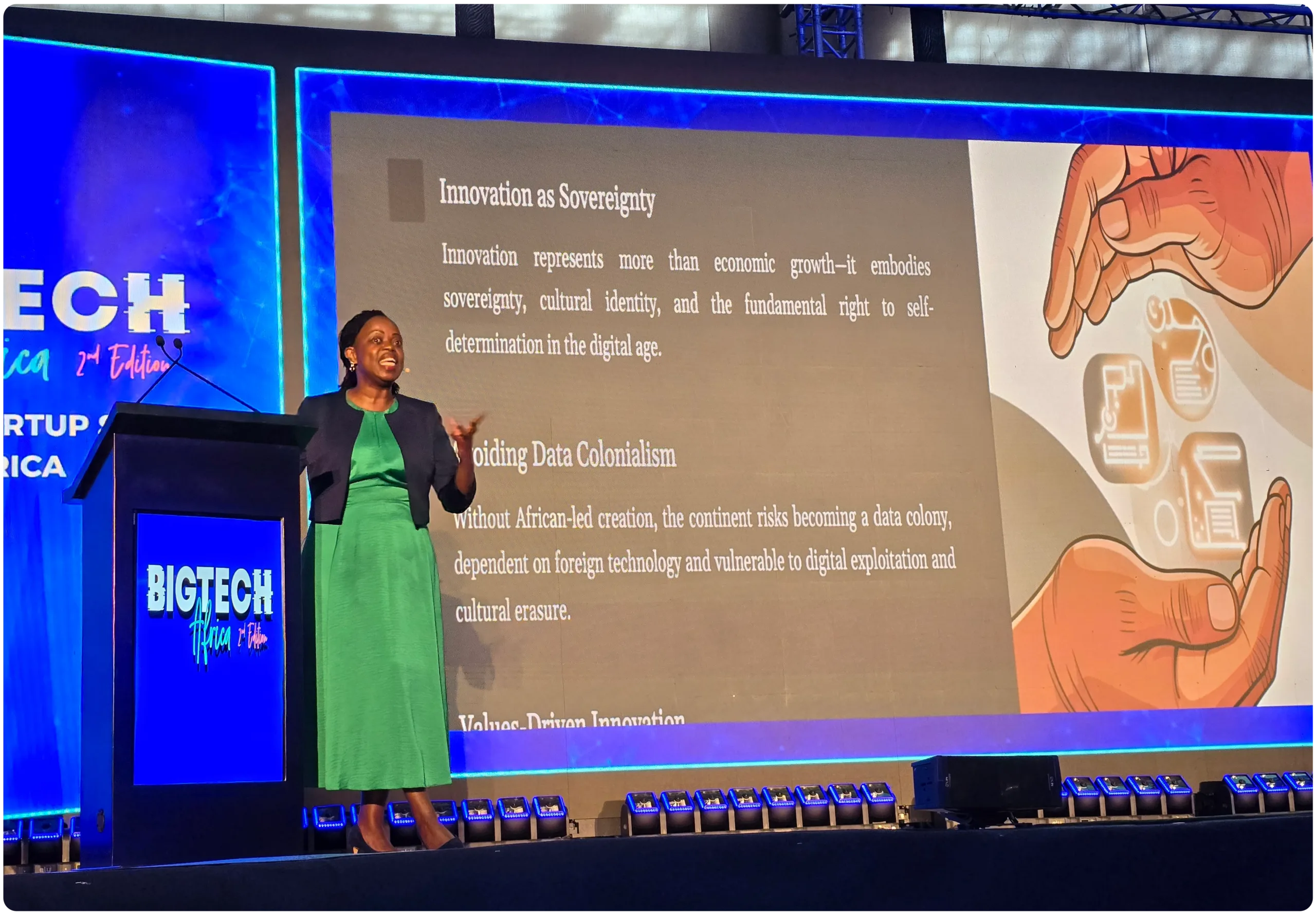
Kendi Ntwiga proposed a powerful idea: an African Innovators Passport—a framework to enable cross-border mobility for entrepreneurs and their ventures. Innovation cannot thrive in silos; it requires freedom of movement, collaboration, and continental integration.
The same should apply to ideas, technology, and capital. An African Innovators Passport would allow startups to operate seamlessly across borders, access new markets, and form regional clusters capable of competing globally. Such a passport would not only enable mobility but also hardwire the cross-border supply chain linkages that African corporates must now champion.
Conversations on stage matter, but they must translate into action. The future of Africa’s innovation ecosystem will not be imported – it will be built by Africans, for Africans, with their own passport to innovation.
Lessons from the First Wave
As I listened, I reflected on my own journey with TEF. Between 2014 and 2021, we built a model that empowered thousands of entrepreneurs from the bottom up across 54 African countries through training, mentoring, and $5,000 seed grants. It was the largest donor-led entrepreneurship programme in Africa — but I also learned its limits.
Time and again, TEF entrepreneurs told us that while the grant helped them get started, what they truly valued were mentorship, skills, and access to alumni. Without integration into corporate or government supply chains, their ventures remained small—local rather than continental, survivalist rather than scalable.
I argued strongly then, as I do now, that entrepreneurship without market access is economic theatre. Grants may ignite sparks, but contracts sustain the fire.
Post-COVID, technology has accelerated this reality. Digital platforms are now essential for reaching customers beyond borders.
The lesson is clear: the next stage of Africa’s entrepreneurship journey must go beyond training and funding. It must be about partnerships that connect startups directly to customers, contracts, and scale.
That experience now frames a wider shift playing out across the continent.
From Donor Funding to Corporate Partnerships
Today, the centre of gravity has shifted. Corporations – not donors – are becoming the new scaffolding of the African entrepreneurship ecosystem. This transformation is profound.
Donors wrote cheques; corporates write contracts. Philanthropists offered training; corporates offer customers. Startups are no longer recipients of aid but suppliers, collaborators, and innovators embedded within global and African value chains.
Global companies are leading the charge:
- Visa and Plug and Play are partnering to co-create fintech solutions, integrating African startups into Visa’s global systems.
- Google for Startups Accelerator Africa supports tech-enabled ventures with growth capital and expertise.
- Microsoft Africa Transformation Office provides startups with AI tools, cloud infrastructure, and access to global customers.
They are no longer coming to Africa only as CSR actors—they are embedding startups into their supply chains, co-developing products, and offering access to global customers. These are not acts of charity; they are strategies for growth.
The partnerships are designed to scale innovation, de-risk entry into new markets, and capture Africa’s vast young consumer base.
When I built corporate partnerships at TEF—Microsoft, Google, Facebook, Sage, and Coca-Cola—they were largely about product access. Entrepreneurs received free trials for a year, after which they were expected to pay for continued use. Valuable as these partnerships were, they stopped short of integration. Entrepreneurs were not invited into the corporation’s supply chains or procurement systems. That is what must change now.
The African Catalysts Step Forward
Encouragingly, African corporates are beginning to act not just as sponsors but as strategic partners – true catalysts for innovation.
- Safaricom (Kenya) has turned its M-Pesa platform, with over 50 million users, into a launchpad for fintech startups. By opening its APIs, it enables developers to build payment, credit, and savings solutions on its infrastructure, offering startups instant scalability.
- MTN (Pan-African), through its Cloud Accelerator Programme, provides startups with funding, mentorship, and access to the MoMo platform, reaching 290 million subscribers across Africa.
- GTCO, Access, Zenith (Nigeria) are investing in fintech partnerships, embedding startups into their digital ecosystems and transforming how millions access financial services.
- Even leading fintechs such as Flutterwave and Paystack are becoming anchors themselves, supporting smaller startups through APIs and co-development.
These shifts mark a turning point: African corporations are no longer passive observers; they are catalysts, providing capital, credibility, and customers. They show that market access is the most valuable form of investment.
Why African Conglomerates Must Open Their Gates
Africa is home to large indigenous conglomerates that now hold the keys to market access. Companies like Nestoil (Nigeria) — a leading oil and gas group — have already begun integrating SMEs into their operations through mentorship, contracts, and infrastructure support. By embedding smaller businesses into their value chains, conglomerates become not just beneficiaries of innovation but enablers of it.
Similarly, large conglomerates like Dangote Group possess scale, capital, and reach—but they often lack the agility and digital innovation that startups bring. By forging partnerships with startups in logistics, predictive maintenance, AI analytics, renewable energy, and modular manufacturing, they can gain a competitive advantage while supporting local enterprise.
These collaborations are not CSR—they are strategic insurance. In Africa’s fast-changing markets, the risk is not innovation—it’s inertia.
The future of African business will belong to those who open their gates, share their data, and co-create solutions with the next generation of entrepreneurs. These conglomerates are not just participants; they are potential catalysts transforming entire industries by integrating innovation into their DNA.
From Philanthropy to Partnerships
Ten years on, if I were designing an entrepreneurship programme for 2025 and beyond, I would build it around co-creation: startups learning from and working with large corporations, accessing their markets, and feeding talent into their pipelines. Grants and training would remain important, but the fundamental transformation would come through contracts, not cheques. The first decade built the ecosystem. The next must build the economy.
Conclusion: The Catalysts of a Continental Future
Africa’s innovation journey is entering its second act. The first act was about belief—convincing the world that African entrepreneurs could create and lead. The second is about scale—embedding those entrepreneurs into the very fabric of commerce and industry.
The catalysts of this new era are not philanthropists but partners: corporations, investors, and entrepreneurs who understand that Africa’s growth will come not from CSR but from co-creation. From contracts that build capacity, from ecosystems that create markets, and from Africans who design, own, and drive their future.
The next chapter of Africa’s entrepreneurship story will not be written in donor reports ─ it will be signed in supply-chain contracts, sealed in partnerships, and delivered by those who see opportunity where others once saw risk.
At BIGTECH Africa in Tunis, these ideas were not theory; they were in motion. From Sidi Saccoh’s collaborative leadership to Kendi Ntwiga’s vision for an African Innovators Passport, the conversations captured a continent on the cusp of its next leap. What began as a gathering of minds felt like a blueprint for Africa’s second act, in which startups and corporates build not just ecosystems but economies.
Parminder Vir OBE
Ambassador, India-Africa Tech & Startup Bridge: BIGTECH Africa 2026
Entrepreneurship Expert, Oxford Saïd Entrepreneurship Centre
Former CEO, Tony Elumelu Foundation