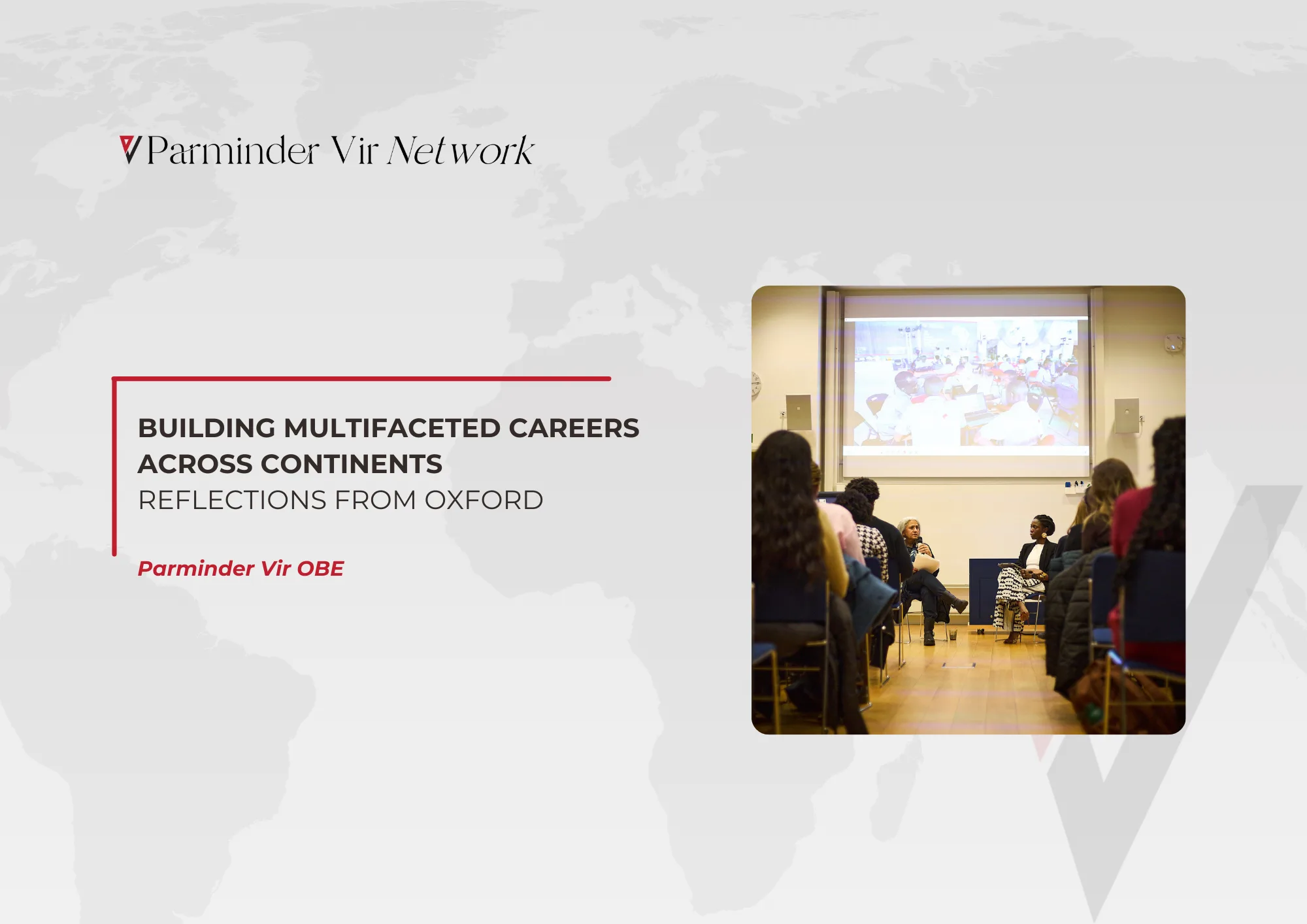
Arriving in Oxford, it was a cold, grey evening for a fireside chat hosted by the Oxford Africa Business Alliance. The city was wrapped in winter quiet. But inside, something else was stirring.
The Oxford Africa Business Alliance is part of the wider Oxford Africa Business Forum, a student-led platform that brings together future leaders, investors, policymakers, and entrepreneurs engaged in Africa’s long-term development. Based at Saïd Business School, the Alliance reflects what draws so many here: a space where global ambition meets intellectual seriousness, and lived experience from across continents is not only welcomed but actively held in conversation.
There was something profoundly moving about being welcomed by Blessing Abeng, a young woman I first met ten years ago in Lagos, now Co-Chair of the Oxford Africa Business Alliance at Saïd Business School, University of Oxford. Life has a way of folding time back on itself like that.
Blessing greeted me at the station with her trademark warmth and unstoppable energy. As we walked briskly towards Saïd Business School, I reflected on the quiet arc of her journey. She and her husband, Uwem Uwemakpan — my former colleague — created an additional home in the UK. Since then, I’ve watched them contribute meaningfully to the UK’s digital landscape, building bridges between Africa and Europe with intention and care.
Saïd Business School is a space I know well. I’ve attended several Skoll World Forums there over the years. And Oxford itself holds layers of personal memory for me — not least because I spent three years here visiting my daughter while she studied at Wadham College. Still, as we walked through the pristine, wood-panelled corridors and into the gleaming lecture theatres, I felt an unexpected flicker of nerves. Blessing pointed to the room where the fireside chat would take place in less than thirty minutes. Then she was gone, swept into last-minute organising.
I was left with Uwem, and as always, our conversation quickly moved to the deeper questions — African entrepreneurship, funding gaps, policy, geopolitics, the long view. Uwem has a calm, grounded way of seeing the world. He heads investments at Launch Africa Ventures in Cape Town, and our conversations are never rushed. They are rooted.
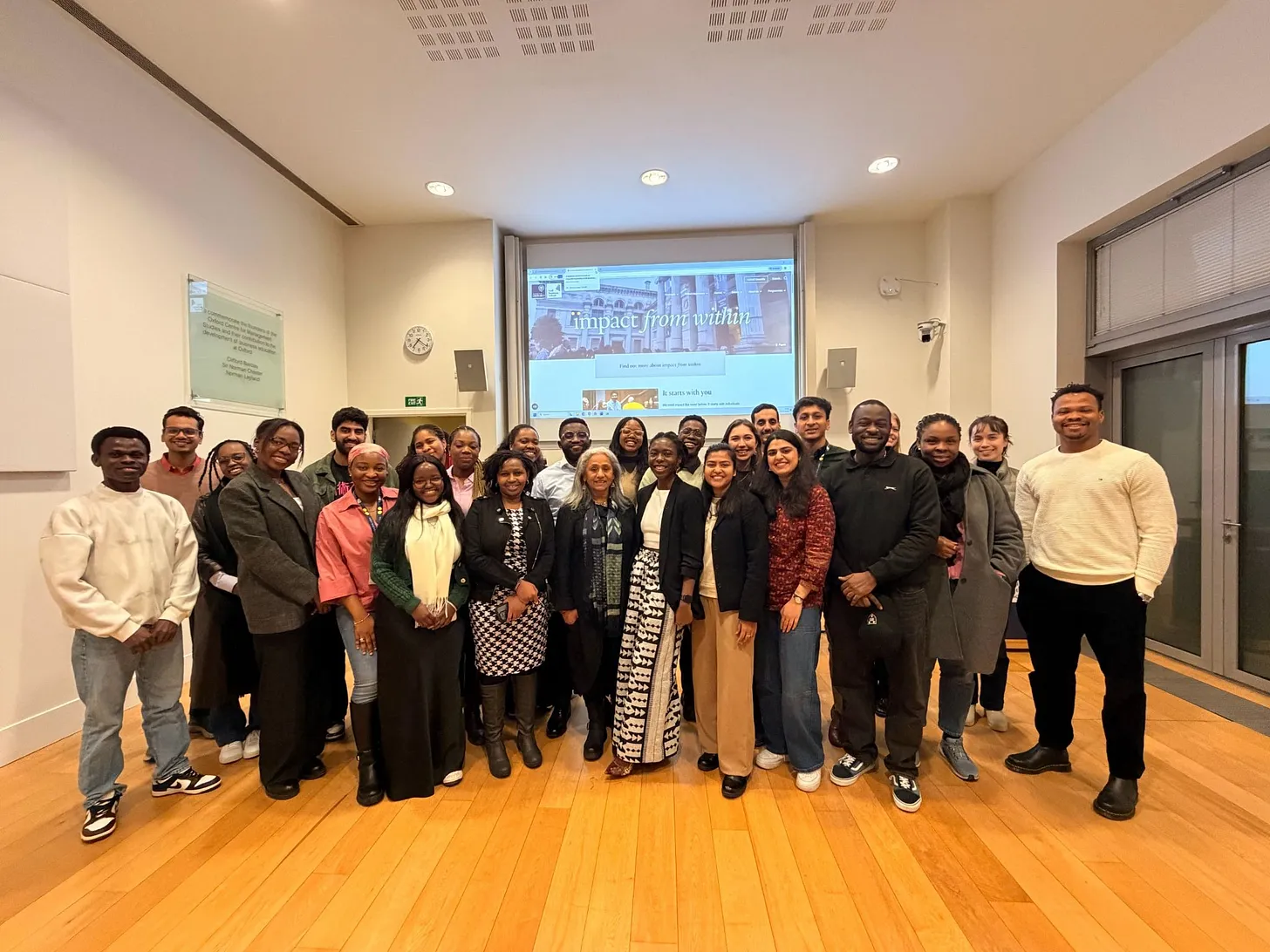
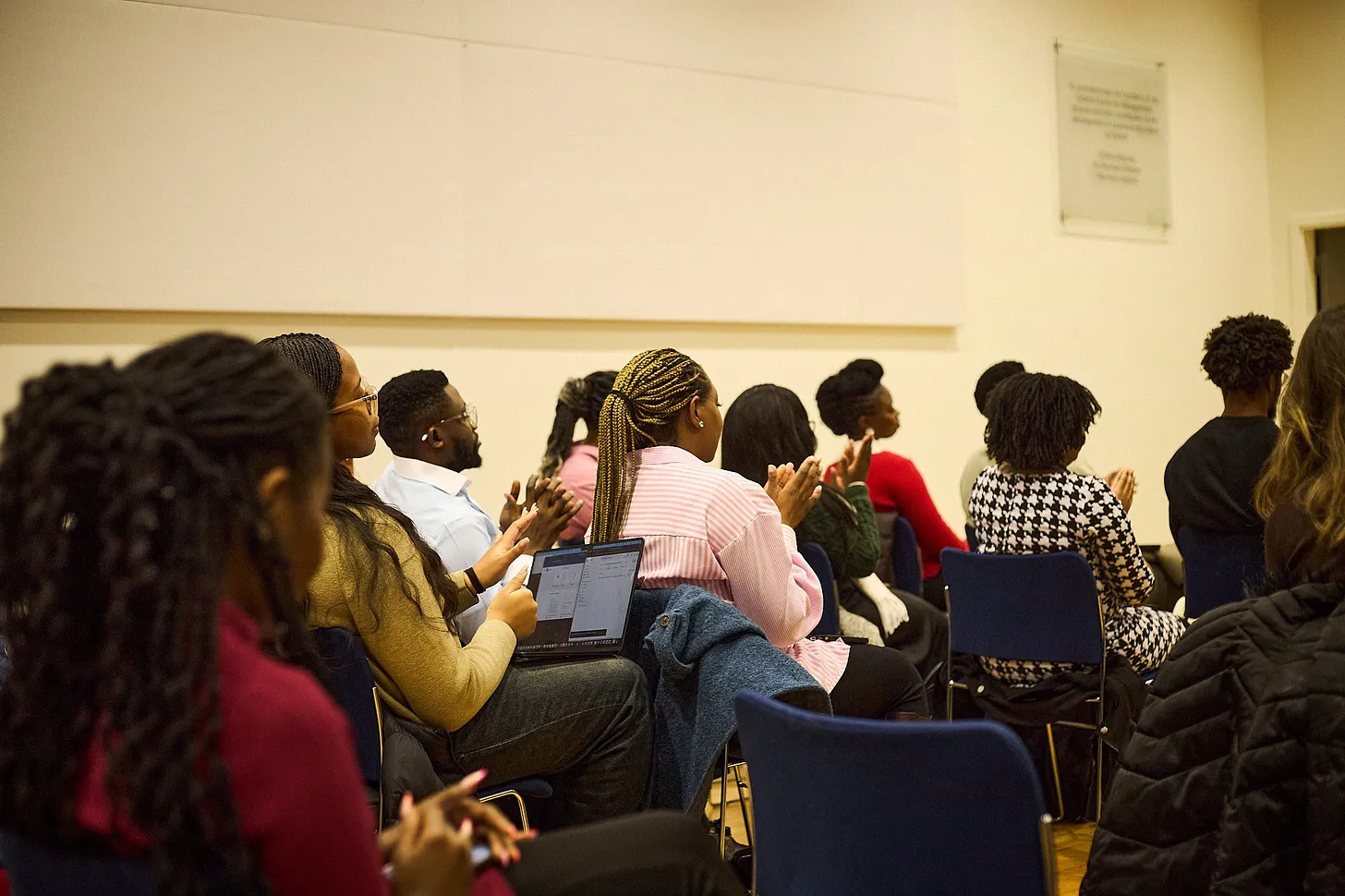
At 5.30 pm, we entered the room. It was full. I paused. I looked around. I took it in. The faces. The warmth. The collective attention of young men and women gathered not just to listen, but to think.
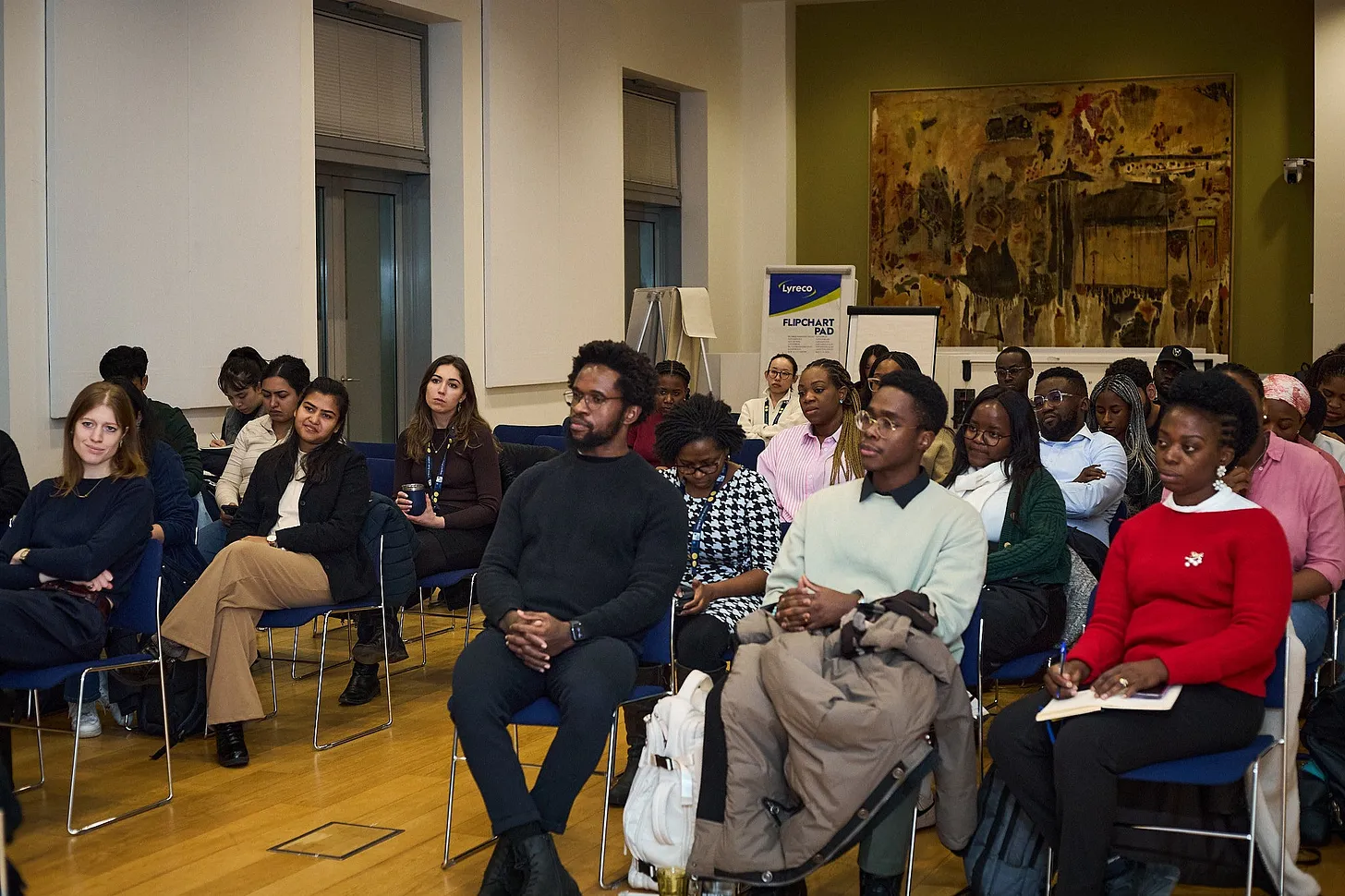
The group was remarkably diverse — in nationality, discipline, ambition, and life experience. MBA students, master’s students, Rhodes Scholars. An actress and writer pursuing an MBA to learn the language of investors and build an organisation to support emerging creative talent. A young Rhodes Scholar is engaged in renewable energy. Several women with backgrounds in impact investing, seeking to deepen their skills and shape innovation more deliberately. An intense young woman from Nigeria, passionate about professionalising the Nigerian Media and Entertainment sector. She has already worked for Spotify in Sweden.
That diversity is not accidental. Saïd Business School attracts students who are already operating across borders — geographical, intellectual, and professional. Many come not only to acquire technical skills but also to situate themselves within global systems of capital, policy, and power, and to consider how those systems might be reshaped for greater equity, intention, and imagination.
One young woman from Kerala, South India, ran an upscale social enterprise in waste management that empowered women to produce children’s toys from recycled materials. She was thinking about distribution into Western markets. She told me she had been moved by my work with African entrepreneurs — and wondered whether her skills and experience might one day serve Africa too. Another student was studying African Studies to better understand the continent beyond headlines and abstractions.
I asked them why they had chosen an MBA. And why Oxford?
The answers echoed one another. Because:
… the Oxford name opens doors… they wanted acceleration… they wanted language—the language of business, capital, systems… they wanted networks and a structured space for learning.
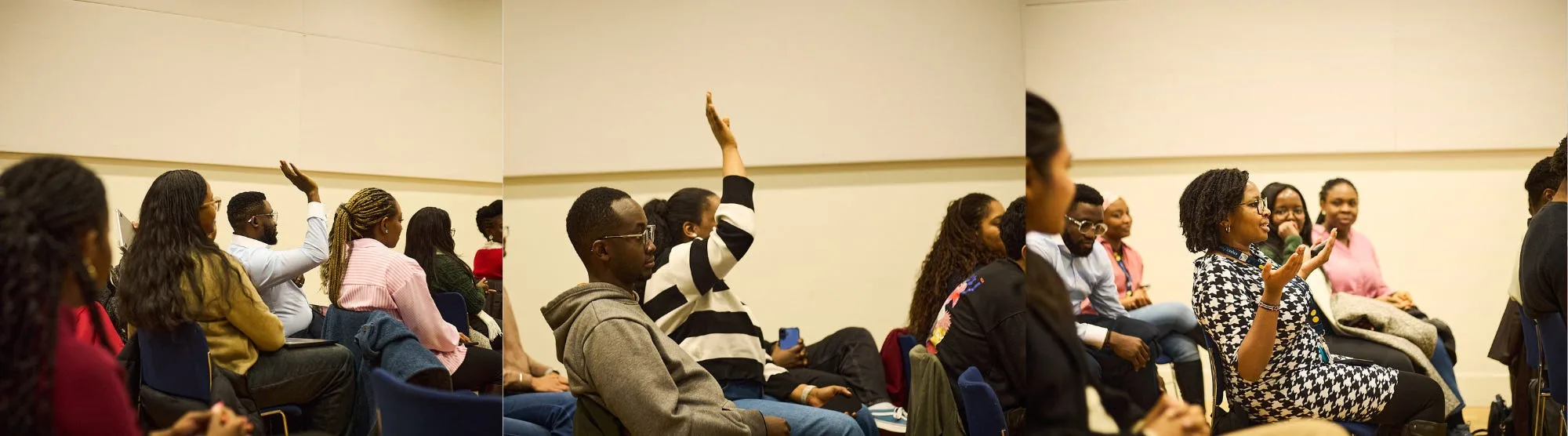
During the Q&A, the questions turned personal.
How had I navigated working across borders and cultures? What had sustained my professional relationships over decades? Where had I found support? I didn’t hesitate. I spoke of Julian — my husband — and the quiet but radical act of being with someone who respected my career ambitions as thoroughly as he did his own.
Another question followed: What does home mean to you, when you have lived and worked across so many countries and cultures? I told them this: I never forget where I come from—a small village in Punjab. I came to Britain as a nine-year-old with a suitcase full of culture. Displacement, for me, has never been loss alone; it has been strength. I know who I am. Close your eyes, I said. Imagine yourself sitting at your grandmother’s feet. Hear her voice. That is home.
As I spoke, I was conscious of something else. Their presence here in Oxford — their curiosity, their questions, their energy — would leave traces. On bus drivers. Shopkeepers. Tutors. Landlords. Fellow students. Institutions. They would shape the spaces they passed through, whether they realised it or not.
Oxford itself began to fold into memory.
In 1979, I had come here on an assignment to map ethnic minority arts across the Southern Region. I went beyond the dreaming spires into Asian and Caribbean communities on the city’s edges. I met Indian classical dancers, Caribbean musicians, writers, and poets. I documented their work, added them to directories, explained how regional arts funding worked, how to apply, and how to be seen. I bought my first vinyl record in Oxford.
In 2013, I returned —this time to leave my daughter as she began her Sanskrit degree at Wadham College. Through her, I encountered another Oxford. One where African, Asian, and Caribbean students challenged institutionalised exclusion through the “I Too Am Oxford” campaign. In Oxford, she and her student friends launched Skin Deep Race and Culture magazine, which continues to this day.
And even before my own encounters, there was another lineage: Julian’s father, Fernando Henriques, did his PhD in Social Anthropology here after the Second World War. He also served as the President of the Oxford Union.
As I boarded the train back to London that evening, I wished I could bottle what I had felt in that room — the camaraderie, the joy, the seriousness of purpose. Faces bright with possibility, fully aware of their privilege, and equally conscious of responsibility.
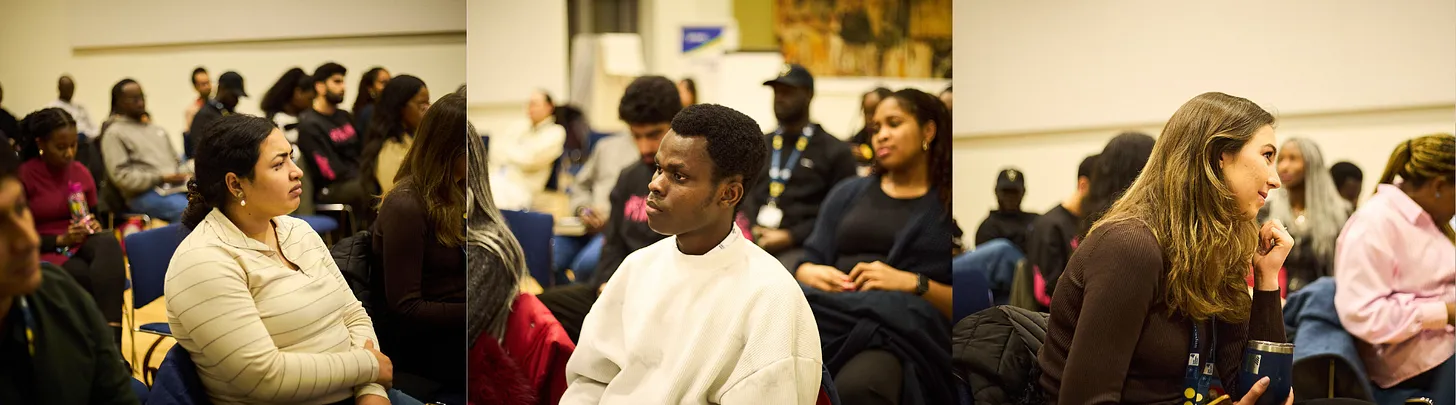
Some would return home to deepen their work in renewable energy, impact investing, and African studies. Others would build careers in the UK or Europe. Whatever paths they chose, I felt certain this experience would change them.
The energy in that room reminded me of another gathering: over a thousand African entrepreneurs from 54 countries convened in Lagos in 2015 for the first Tony Elumelu Foundation Entrepreneurship Forum. Different context. Same hunger. Same sense of collective possibility.
What an honour it was to meet these students. Each of them will make an impact. Each will leave the world better than they found it.