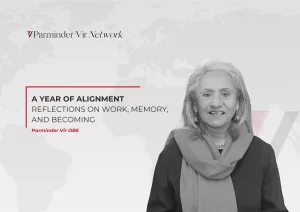
As this year draws to a close, I find myself pausing not out of exhaustion, but out of recognition. 2025 has not been a year of arrival; it has been a year of alignment. A year in which many strands of my life, work, and long memory finally began to speak to one another.
Much of my professional life has been devoted to building institutions, programmes, films, platforms, and pathways for others. This year, something shifted. I turned deliberately towards my own story, not as nostalgia, but as infrastructure. I understood, perhaps more clearly than ever before, that memory itself is a form of power, and that archives, when activated, can speak to the future.
The work has been deep and demanding. Writing the memoir has required discipline, emotional precision, and courage. Returning to the years of the Greater London Council (GLC) in the 1980s—those intense years of institutional struggle, fragile victories, solidarities, and betrayals—has been both bracing and affirming. I am no longer trying to erase those years. I am claiming them. Naming the work. Naming the impact. Naming myself within it.
As I gathered and organised the GLC Black and Ethnic Arts Archive, something unexpected happened. Thousands of documents, images, and fragments moved from boxes and hard drives into a living space of memory. What once felt like a private history now feels like shared inheritance. This has been profoundly moving. The past is not done with us; it’s asking to be used.
The documentary work has reinforced what I know in my bones: storytelling is not decoration; it is strategy. Watching ideas move from conversation to script to screen has reminded me of why I stayed with uncertainty, why I continue to choose complexity over comfort. Stories shape imagination, and imagination shapes economies. A four-part documentary series I have been working on chronicles the life and entrepreneurial journey of an African business leader, a blueprint and a provocation about enterprise, community, cultural identity, and legacy. It is a story for those who dare to dream, to lead, and to build in Africa, for Africa.
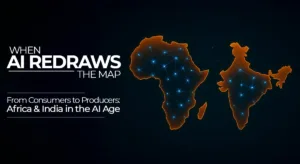
I have also remained firmly engaged with the present. Africa’s tech and entrepreneurship ecosystems are evolving fast, unevenly, and with extraordinary creativity. This year’s conversations—from Cape Town to Tunis to London, from founders to policymakers—have sharpened my thinking about AI, scale, and power. I am clear-eyed about what excites me and what does not. I am interested in depth, in systems, in legacy thinking.
On a personal level, 2025 has asked for tenderness. Writing has reopened old rooms. Some were full of light; others carried grief, anger, or unfinished conversations. I have learned to sit with these moments without rushing towards resolution. Not everything needs to be healed to be held.
Family has remained my anchor. Watching my daughters live boldly, across borders and disciplines, has been a quiet joy. I cherish the memories of the MJ Extravaganza, the unforgettable wedding celebration Mala and Jake imagined, choreographed, and gifted to all of us who gathered in Bogotá in April this year, the city they call home. From Bogotá, Julian and I went on a four-day trek to Ciudad Perdida (The Lost City) in Colombia’s Sierra Nevada de Santa Marta. I stood at the first of a thousand stone steps, tears flowing, sweat on my skin, utterly still. In that silence, I knew this journey was not about endurance, but about arrival—into gratitude, humility, and something older than me.

My partnership with Julian continues to be one of shared curiosity: long walks in the mountains surrounding our village in Uttarakhand, long conversations, and deep respect for the work that has shaped us. This year, we found ourselves returning again and again to Babymother, our feature film from 1998. We’ve been sharing its story with new audiences through special screenings and conversations. Revisiting the film, I am reminded of the power of imagination and the courage to take risks. That reggae musical projected a bold and joyful vision of Black British identity at a moment when such futures were rarely imagined. It challenged norms. It insisted on possibility.
And yes, 2025 was also my 70th birthday. Seventy years young, and still dreaming of Africa’s future. I marked it in conversation with entrepreneurs, investors, and ecosystem builders committed to shaping that future with integrity and purpose. I could not have imagined a better way to step into this next decade. The story of African entrepreneurship is still being written, and I remain grateful to continue being part of it.
This year, I learned discernment: to protect my time and energy, knowing that generosity without structure leads to depletion. It has been a year of saying no with grace and yes with intention.
If I had to name the through-line of 2025, it would be this: integration. The activist, the producer, the institution-builder, the writer, the mentor, the woman, the daughter, the mother—all are now in the room together. No longer competing. No longer apologising for space.
I enter the next year not with grand declarations, but with quiet confidence. The work is clear.
The voice is steady.
The story is mine to tell.
And I am ready.
Happy New Year!